
Türkiye · Province
Metal fabrication and installation in Çanakkale
Constant, strong wind; coastal corrosion alongside demand for agricultural buildings.
This page also covers the surrounding area: Biga · Çan · Ezine · Ayvacık
01Area
What kind of work comes up in Çanakkale?
In Çanakkale, one thing drives the design: wind. The Dardanelles and the Aegean coast are among the areas with the most persistent wind in the country. Here, wind is not a storm met a few times a year but a load the structure is exposed to every day; this means the design has to account for fatigue as well as one-off strength.
In practice, this means connections are more critical than sections. Under constant wind, a joint loosens not from a single load but from being strained again and again. That is why, on our coastal jobs, bolt selection, tightening torque and the spacing of cladding-to-structure fixings are specified separately; we fix cladding not at standard spacing but at closer spacing suited to the local load.
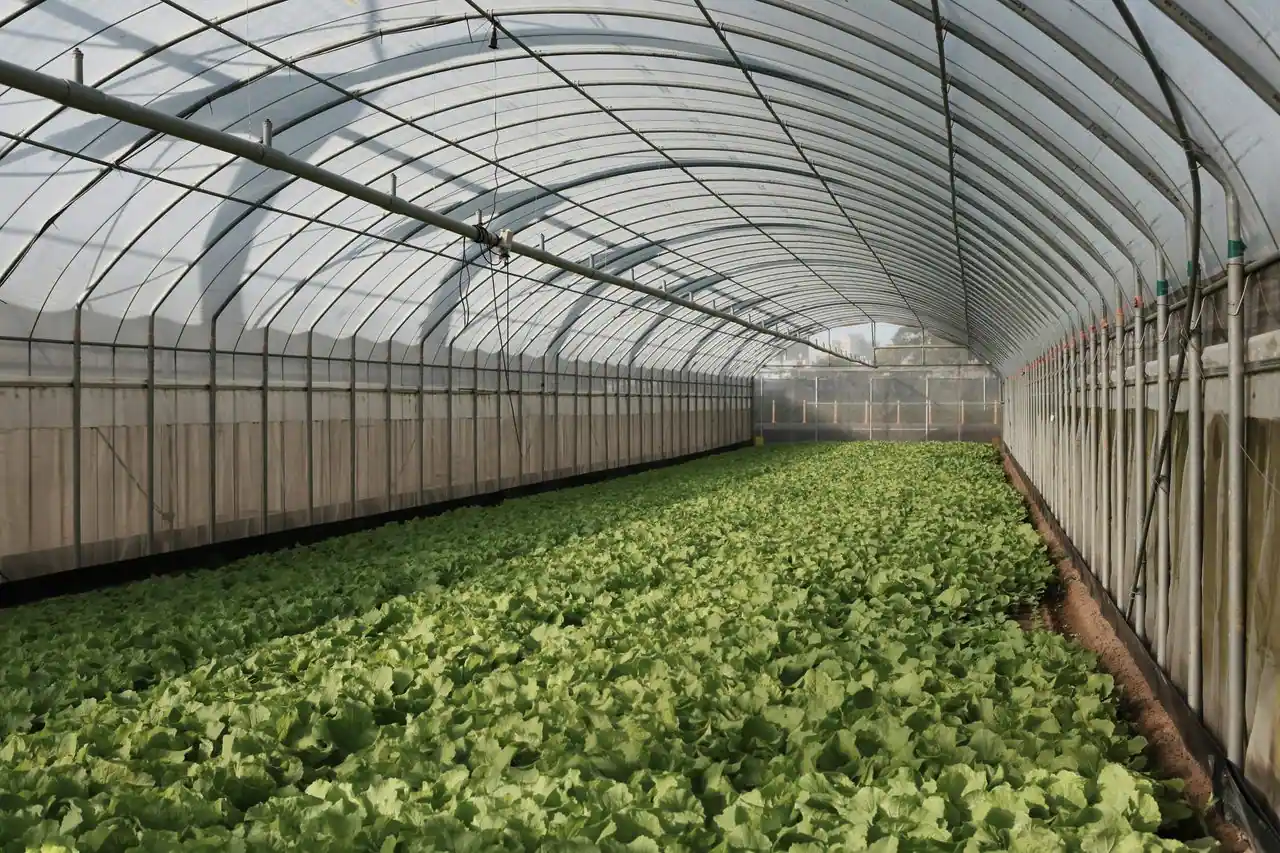
The second issue is uplift. On lightweight roofs and greenhouses, wind mostly creates suction, pulling the structure upward. This reverses the job of the anchoring: not to support the structure but to hold it down. We calculate greenhouse anchoring with this in mind, and on open ground we choose between screw piles and concrete socket footings according to the soil.
The third is the salty humidity of the coast. Demand for agricultural buildings is strong along the Biga, Ezine and Ayvacık belt, and these buildings are exposed to wind and salt at the same time. A galvanized structure, stainless steel fasteners and sealed ends on hollow sections are standard here; cutting and drilling are finished before painting so that no edge is left unprotected.
Demand profile
Most of our work from Çanakkale is agricultural buildings: greenhouses, barns, hay barns and machinery sheds. Along the Biga, Çan, Ezine and Ayvacık belt this demand is steady; on the coast, warehouses and fencing are added to the list.
What these jobs have in common is that every building stands on open ground. That means the same issue comes first on every job: wind. Whatever the product, the first thing we look at when preparing a quote is which direction the plot is exposed to and whether anything shelters it.
02Services
Featured work in Çanakkale
This list is based on the requests we receive most often from this area. You can also write to us about work that isn’t on the list.
- Steel GreenhousesGreenhouse frames in galvanized profiles, built to withstand wind and snow loads.
- Steel BarnsWide-span barns designed around ventilation and hygiene.
- Steel RoofsComplete roof structures, with purlins, trusses and roofing.
- Steel ConstructionStructural steel systems for warehouses, workshops and commercial buildings.
- Mesh Panel FencesEconomical perimeter security with galvanized + PVC-coated wire mesh panels.
03Local conditions
What drives our decisions in Çanakkale?
Climate, ground, wind and access conditions directly change our decisions on sections, surface treatment and installation. This section explains what we do differently in this area, and why.
01
Constant wind and fatigue
The Dardanelles and the Aegean coast are among the areas with the most persistent wind in the country. The difference here is persistence as much as strength: wind is not a storm met a few times a year but a load the structure is exposed to every day. This means the design has to account for fatigue as well as one-off strength — a connection that withstands a single large load may not withstand the same load repeated thousands of times in the same way.
02
Fixing spacing and tightening torque
In practice, fatigue means connections become more critical than sections. Here, bolt selection, tightening torque and the spacing of cladding-to-structure fixings are specified separately; we fix cladding not at standard spacing but at closer spacing suited to the local load. These invisible differences are what separate a structure that stays sound after a few years from one that works loose.
03
Uplift and the role of anchoring
On lightweight roofs and greenhouses, wind mostly creates suction, pulling the structure upward. This reverses the job of the anchoring: not to support the structure but to hold it down. We calculate greenhouse anchoring with this in mind and choose the foundation type according to the soil type. In addition, because of the salty humidity, galvanizing, sealed ends on hollow sections and cutting and drilling finished before painting are standard here.
04From the field
Situations we often encounter in this area
We don’t give client names, project names or dates; what we describe is the situation itself and how it was solved.
Bolts loosen within a few seasons
A recurring situation in structures under constant wind. A connection tightened to the correct value slowly loosens under repeated loading. In new fabrication, we address this through the connection type and tightening torque; on existing structures, we recommend periodic checks. A single loose bolt is not a problem in itself, but if it goes unnoticed, it shifts load onto neighboring connections and turns into a chain reaction.
Installation day held up by wind
On open ground, working at height depends directly on the wind. Above a certain wind speed we stop installation; this is a safety decision, not a delay. Because we say so from the start, we build the schedule with windy days in mind. Fabrication is not affected by the wait, because painting and surface treatment are completed entirely in the workshop.
05Models
The models we’re asked about most in this area
All are made to measure; the model is a starting point. Changes can be made to suit the dimensions and the opening.
06Delivery and installation
How do we get from Arnavutköy to Çanakkale?
Shipments from Arnavutköy to Çanakkale are planned; parts are prepared in sizes suited to transport. On open ground, wind conditions for installation day go into the plan, and work at height is scheduled accordingly.
Measuring is done in a single visit; which direction the plot is exposed to and whether anything shelters it from the wind are noted on the same visit. Long parts are split to suit the route, and their joints are completed on site. Wind conditions on installation day go into the plan; we state the exact number of days in the quote after the site survey.
We have no branches or dealers; all fabrication is done in our own workshop in Arnavutköy. Price and lead time depend on the size of the job, the opening and the installation conditions — so we don’t quote a figure or a number of days up front here. Send your measurements and location, and we’ll work it out for your project.
07FAQ
Frequently asked questions for Çanakkale
Does constant wind wear a structure out over time?
It does, and it shows most at the joints. A connection that withstands a single large load may not withstand the same load repeated thousands of times in the same way. That is why, in the Çanakkale area, we specify bolt selection, tightening torque and fixing spacing separately for the region.
Will the wind lift my greenhouse?
If it is not anchored correctly, yes — on open ground, the main risk for a greenhouse is not downward pressure but suction, in other words uplift. The job of the anchoring is to hold the structure down. Concrete socket footings or screw piles are chosen according to the soil type; since the two do not do the same job, the decision is not made without information about the ground.
Which surface treatment is right on the coast?
Galvanizing on the body, stainless steel fasteners and sealed ends on hollow sections. Because the wind carries salt inland, the effect is also seen on plots that are not on the seafront. Send us your location, and we will set the scope according to the plot’s exposure.
My plot has a windbreak. Does that change the calculation?
It does. Obstacles such as a row of trees, a slope or a neighboring building reduce the speed at which the wind reaches the structure. But that does not mean protection from every direction; a side left open outside the prevailing direction can be what governs the calculation. Describe your plot’s location and the obstacles around it, and we will assess the exposure together.
Do you install on windy days?
Above a certain wind speed, we stop work at height — that is a safety decision, not a delay. We build the schedule with this possibility in mind. Fabrication is not affected, because painting and surface treatment are completed entirely in the workshop; the only thing that waits is installation.
Should I have the connections on my existing structure checked?
In this region, we recommend it. Under constant wind, even a correctly tightened bolt can loosen over time. A single loose connection is not a problem, but if it goes unnoticed, it shifts load onto neighboring connections. A periodic visual check catches the problem before it grows.