
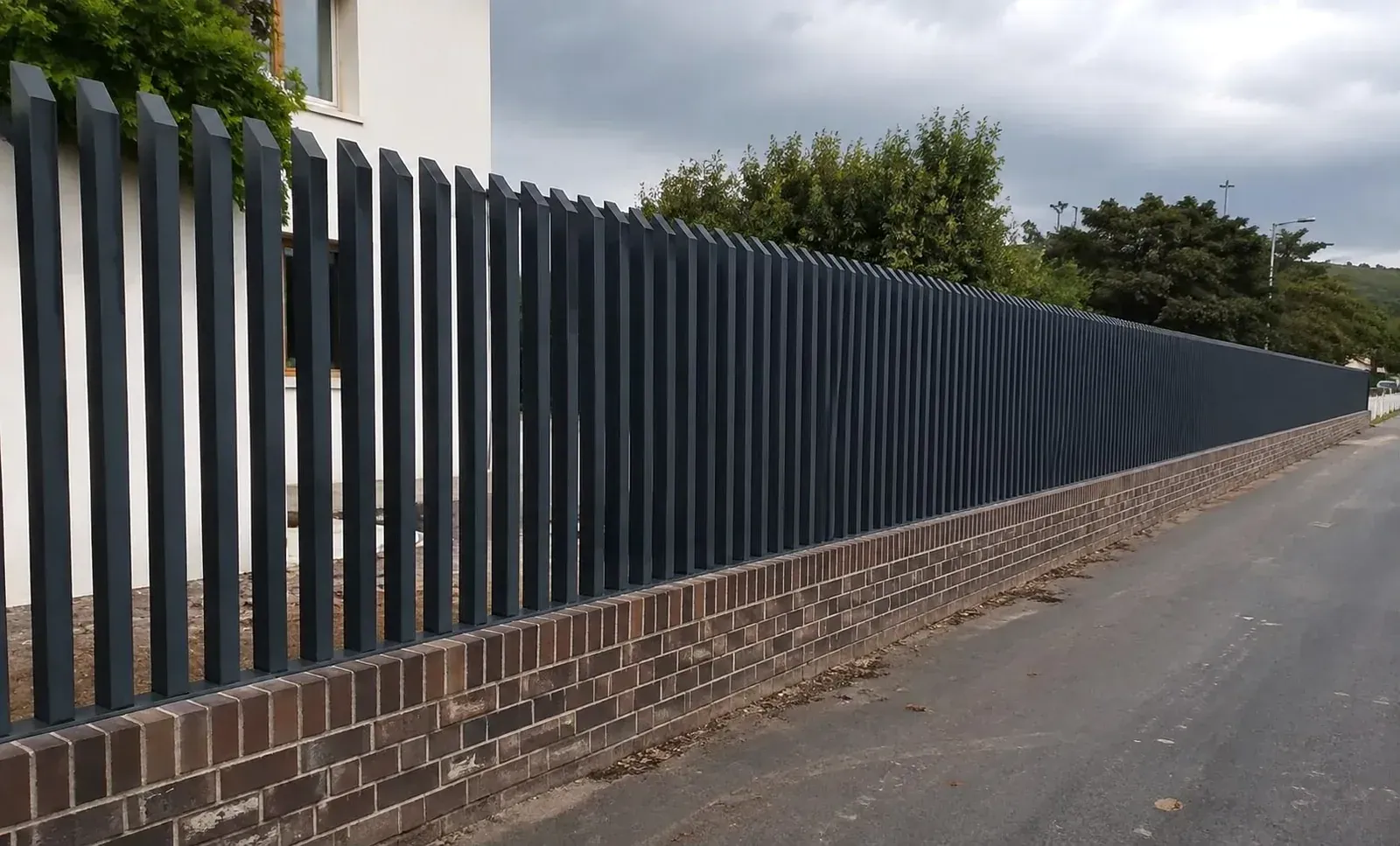
03 / Collection
Fencing and Perimeter Security Systems
A fence is the quickest and most economical way to close off a boundary, but marking a boundary and creating privacy are two different jobs. Mesh panel fences and louvered fences answer these two needs, and the choice depends on what the fence has to do.
01Services
Work covered by Fencing Systems
Enclosing plots, residential complexes and facilities with mesh panel and louvered fences.
02Featured
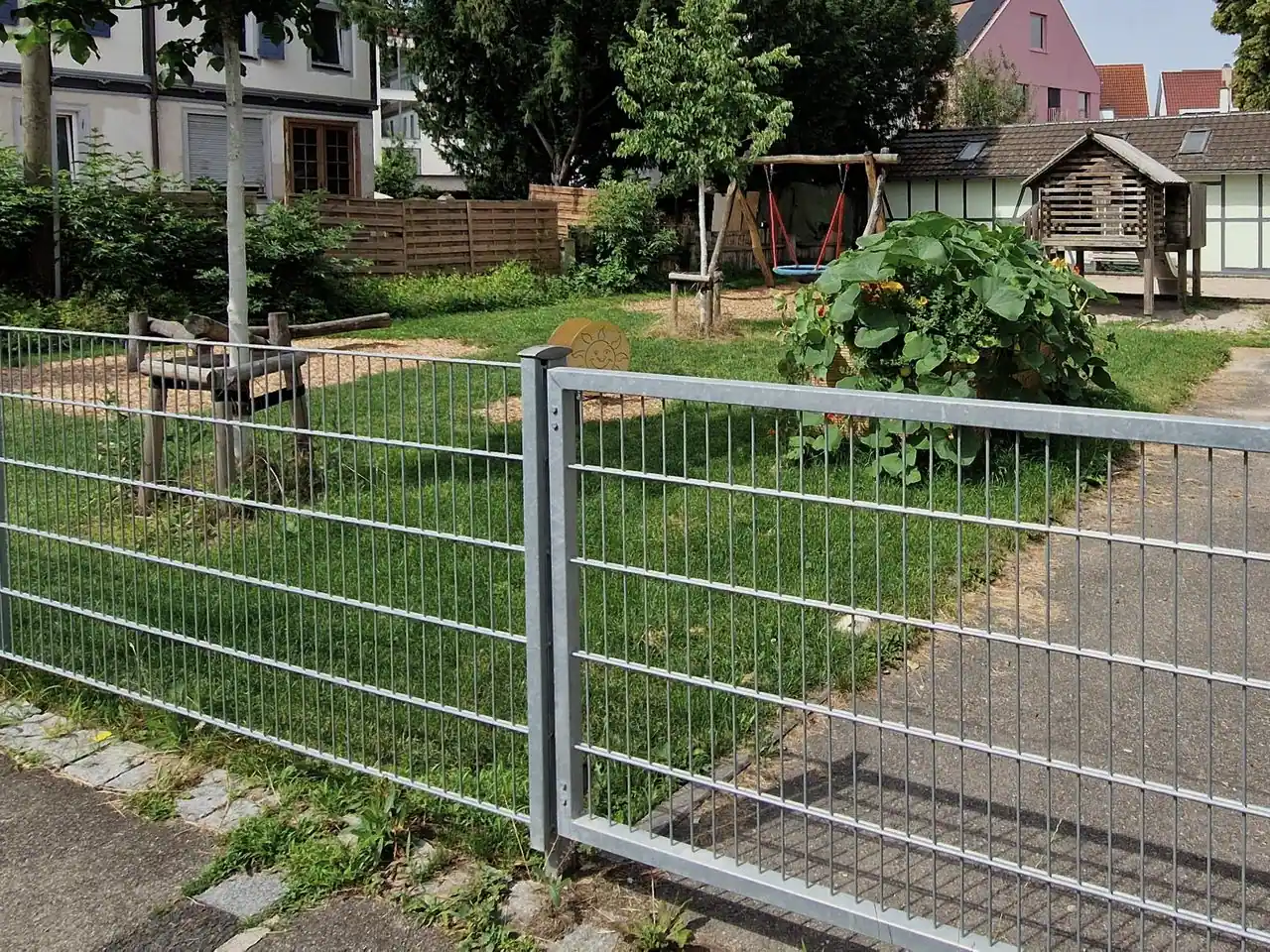
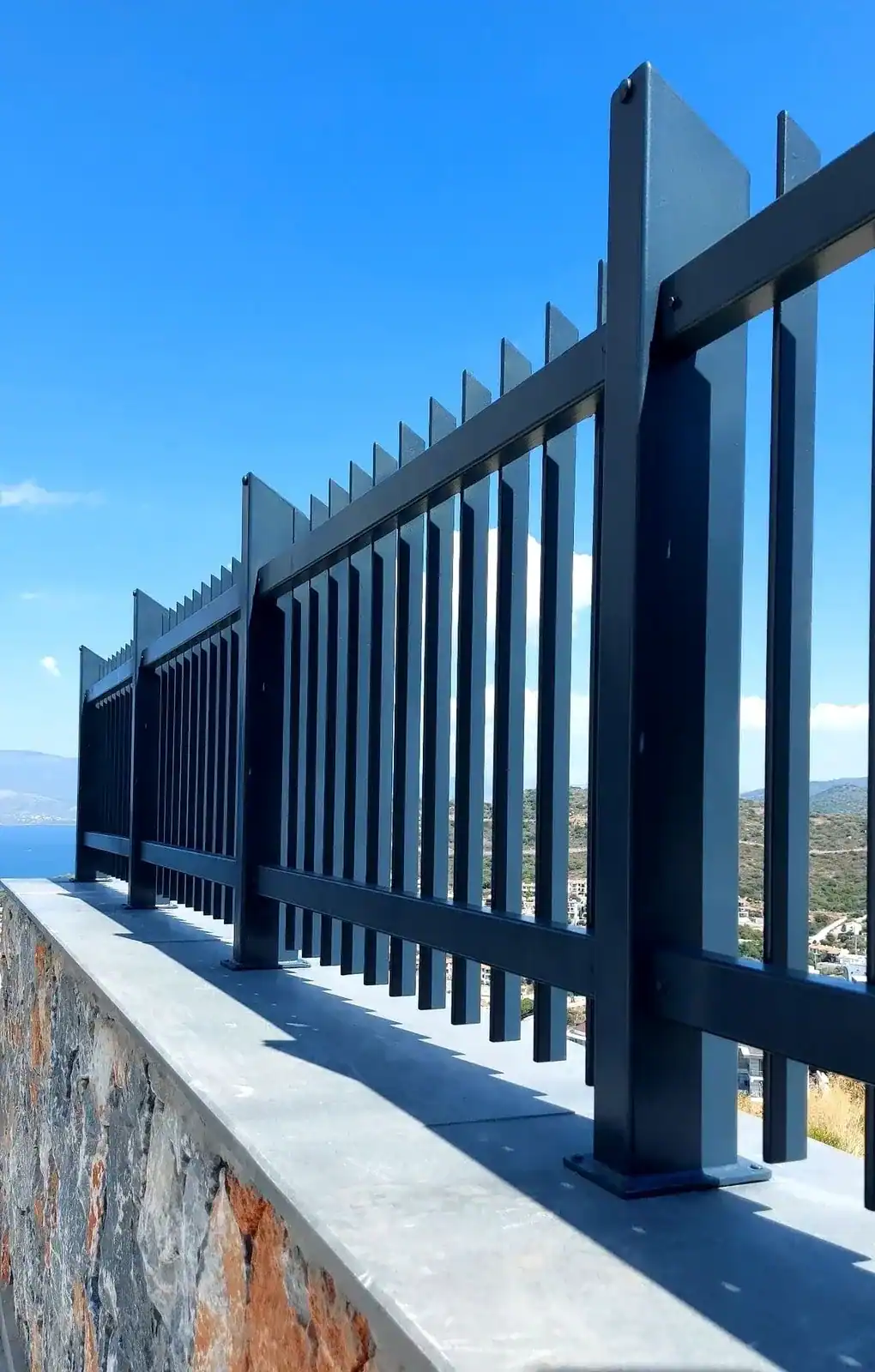
Featured models from this collection
03Approach
Are you marking a boundary or blocking the view?
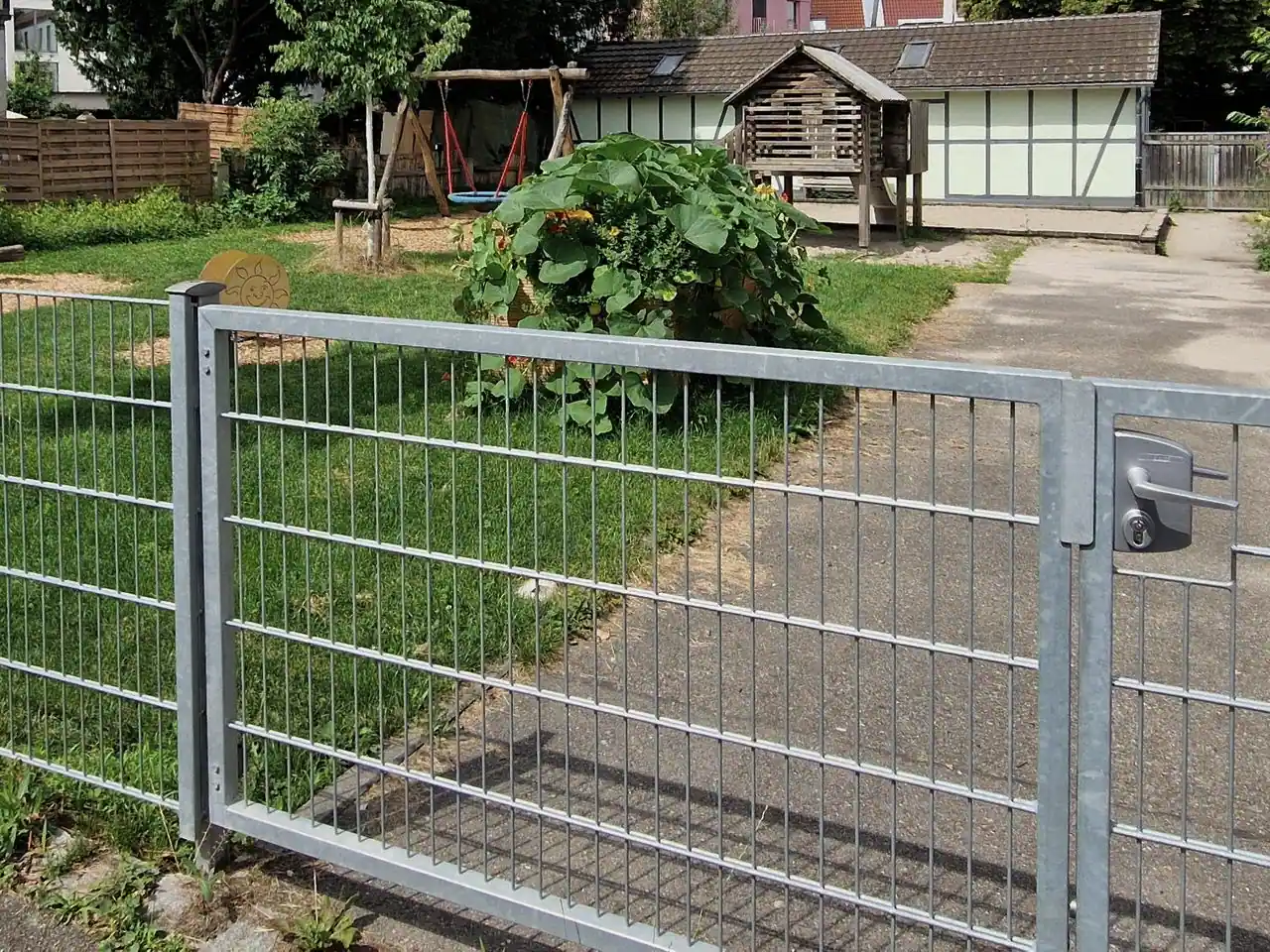
- Mesh panel fences: boundary and economyThe fastest and most economical way to close off long runs; with wind passing through, the load stays low.
- Louvered fences: privacySlat spacing and angle block the view; being aluminum, they do not rust in humid locations.
- Footings sized to the loadA closed surface multiplies the wind load; post section and footing depth increase accordingly.
- Stepped down on slopesPanels are stepped to follow the ground; the panel layout is calculated from the start.
The most common mistake with fencing is making the decision based on the wrong question. People usually ask “which fence is stronger?”, but the real question is: what is this fence for? To mark the boundary of a plot and make it harder to get in, a mesh panel fence is more than enough, and its cost per linear meter is noticeably lower. If you need to block the neighbors’ view and create privacy in the garden, a mesh panel fence does not do that at all; that calls for a louvered fence.
The difference between the two systems is not just how they look; they are fundamentally different in engineering terms as well. A mesh panel fence is open: wind passes through it, the load on the posts is low and the footings can be smaller accordingly. A louvered fence is a closed surface; at the same height, it carries many times more wind load. The post section, post spacing and depth of the concrete footing are recalculated for this difference. Building a louvered fence on mesh panel fence footings means the line will go down in the first strong southwesterly gale.
Material choice also depends on the use. For a mesh panel fence, the deciding factor is the wire coating: wire that is galvanized first and then PVC-coated lasts for years, while wire with only a PVC coating rusts at cut points within a few years. For louvered fences, aluminum is preferred; because it does not rust, it has a clear advantage over steel in coastal and humid locations.
On long runs, the terrain has a say too. On sloping plots the panels are stepped down, so the line follows the ground and the gap left under the steps is kept under control. If this stepping is not calculated in the drawing beforehand, the run ends with a half panel — something you notice even from a distance.
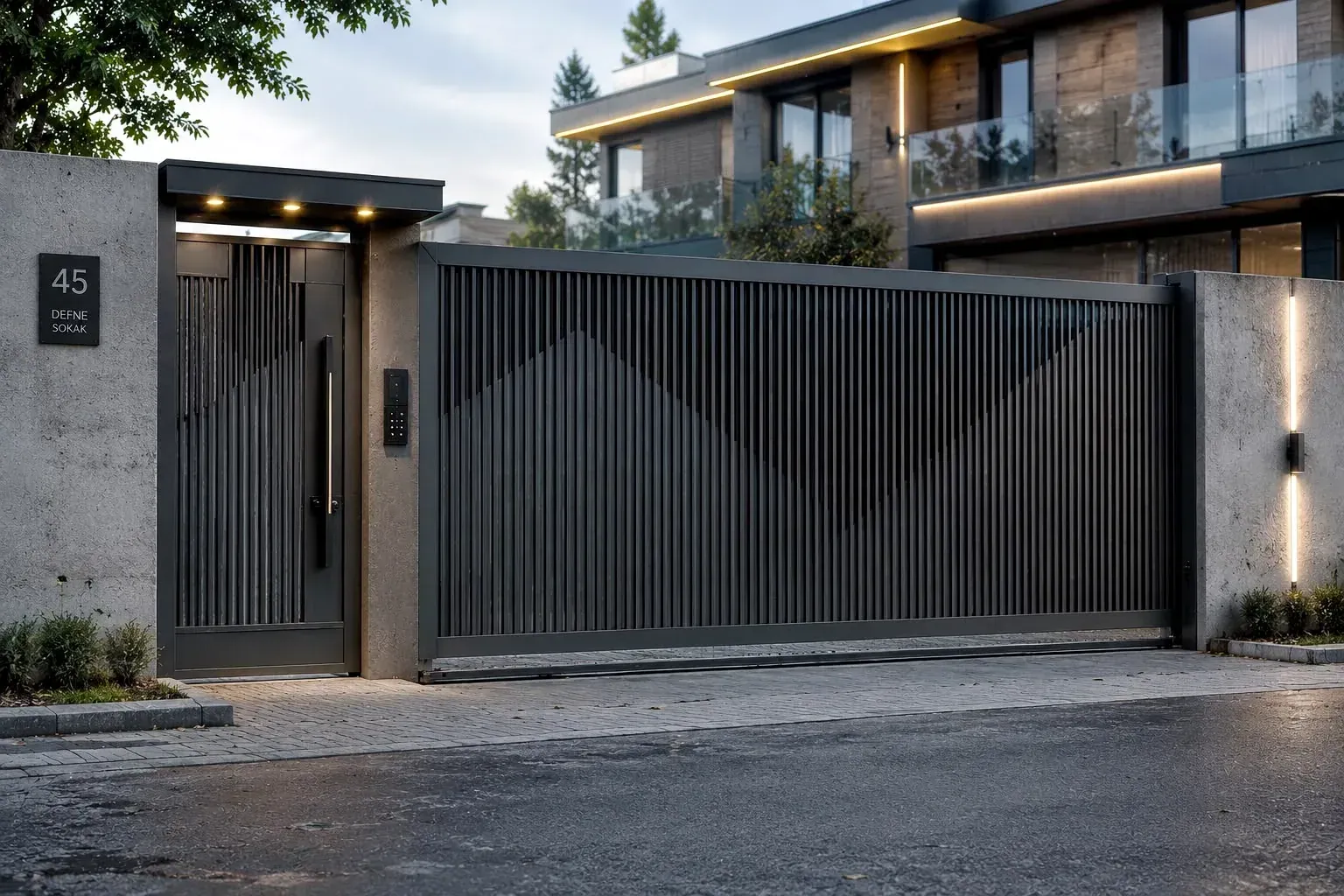
The relationship between the gate and the fence should also be established from the start. If the height, infill style and color change where the fence line meets the gate, the entrance looks disjointed. When we plan the gate and fence together, the last fence panel is divided to suit the gate post, and the line does not break between gate and fence. This detail is often overlooked, but it is decisive for the first impression of the entrance.
04FAQ
Frequently asked questions about Fencing Systems
What measurements do I need to give you for a fence?
For an initial quote, the total length in linear meters and the height you want are enough. For a firm quote, we need to see the slope of the land, the number of corners and the gate openings; these directly affect the number of posts and therefore the footings.
Do fence posts need concrete footings?
For a permanent line, yes. Driven posts look cheap in the short term, but on loose or filled ground the line starts to lean in the first strong wind. We set the footing depth according to the soil type; we do not use the same depth on every site.
Which lasts longer, a mesh panel fence or a louvered fence?
Both last a long time when built with the right materials. For a mesh panel fence, the key is the galvanized + PVC coating on the wire; for a louvered fence, the aluminum does not rust in the first place. What usually shortens a fence’s life is not the material but posts set on inadequate footings.
My plot has a very long perimeter. How can I reduce the cost?
By dividing the line into sections. A common solution is to use a louvered fence on the sections facing the street and the neighbors, and a mesh panel fence along the rear and side boundaries. Since the post and footing logic stays the same, the line remains consistent.
Can I paint the fence myself?
On a mesh panel fence, the wire already comes with a factory coating; painting over it is not recommended, as it damages the coating. On a louvered fence, an anodized or electrostatic powder-coated finish needs no maintenance for years; spots that take a knock can be touched up.
Does it make a difference to get the fence and the garden gate from the same company?
It does. When the height, infill style and color of the gate and the fence do not match, the entrance looks disjointed. When we plan the gate and fence together, the line does not break between gate and fence.
05From the field
Work we have completed in this category
The photos are from Saray Metal’s own projects; they are not illustrative images.
Fencing Systems
Louvered fence
All photos are from Saray Metal’s own projects. Tap a photo to open it uncropped. If you would like to see more, message us on WhatsApp.
06Other categories
Often requested alongside this work
If you are not sure which category fits, write to us
Send a photo or measurements; we will tell you which category the job falls under and how to solve it.