
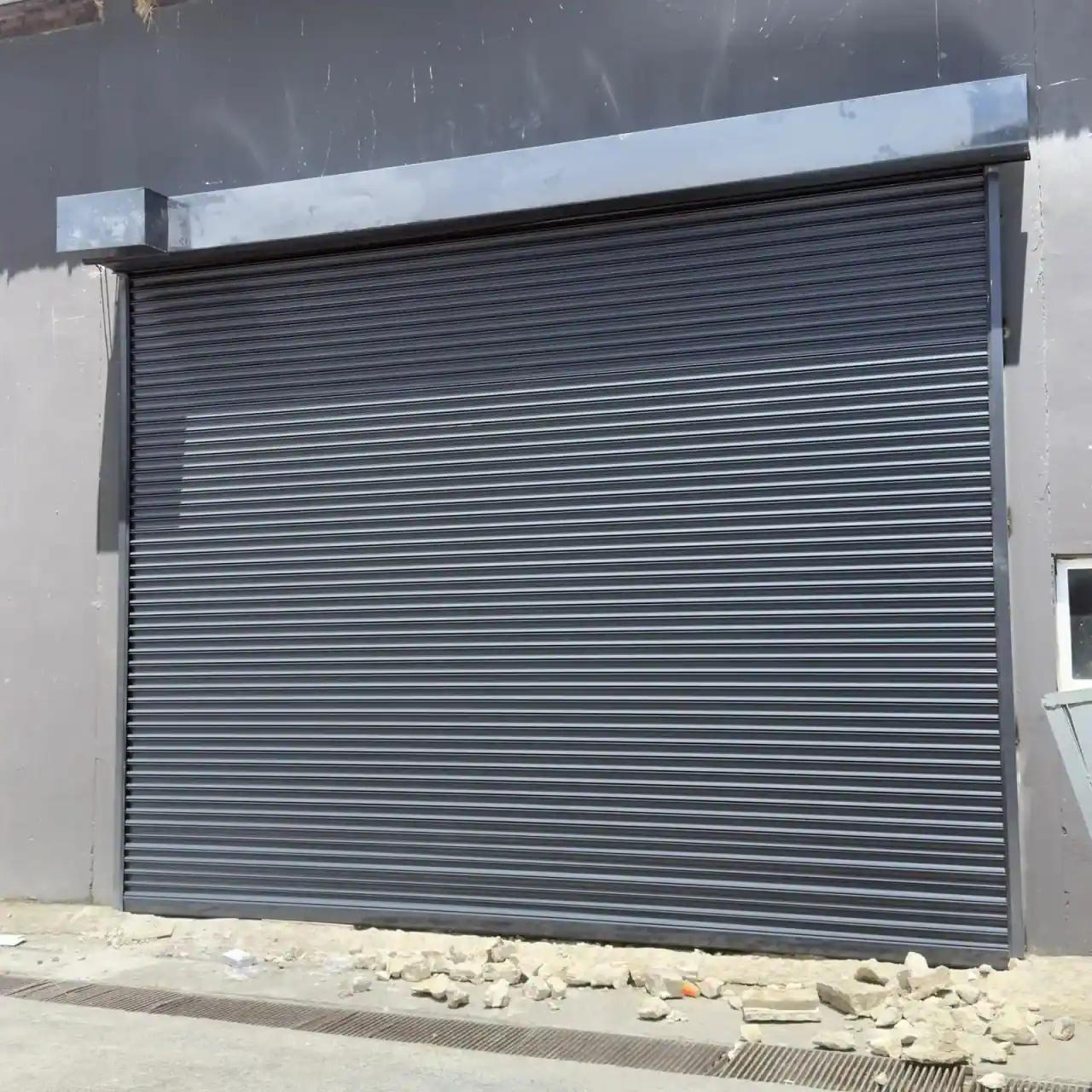
Automatic Roller Shutters
Automatic roller shutters close off the entrances of shops, garages, warehouses and workshops with a motorized slat system. The slat type is chosen according to where the shutter will be used: aluminum when insulation is the priority, steel when impact resistance is.
01Models
Automatic Roller Shutters models
Every model has a code. Sending us the code on WhatsApp is enough to make clear which model we are talking about.
02Definition
What is an automatic roller shutter, and where is it used?
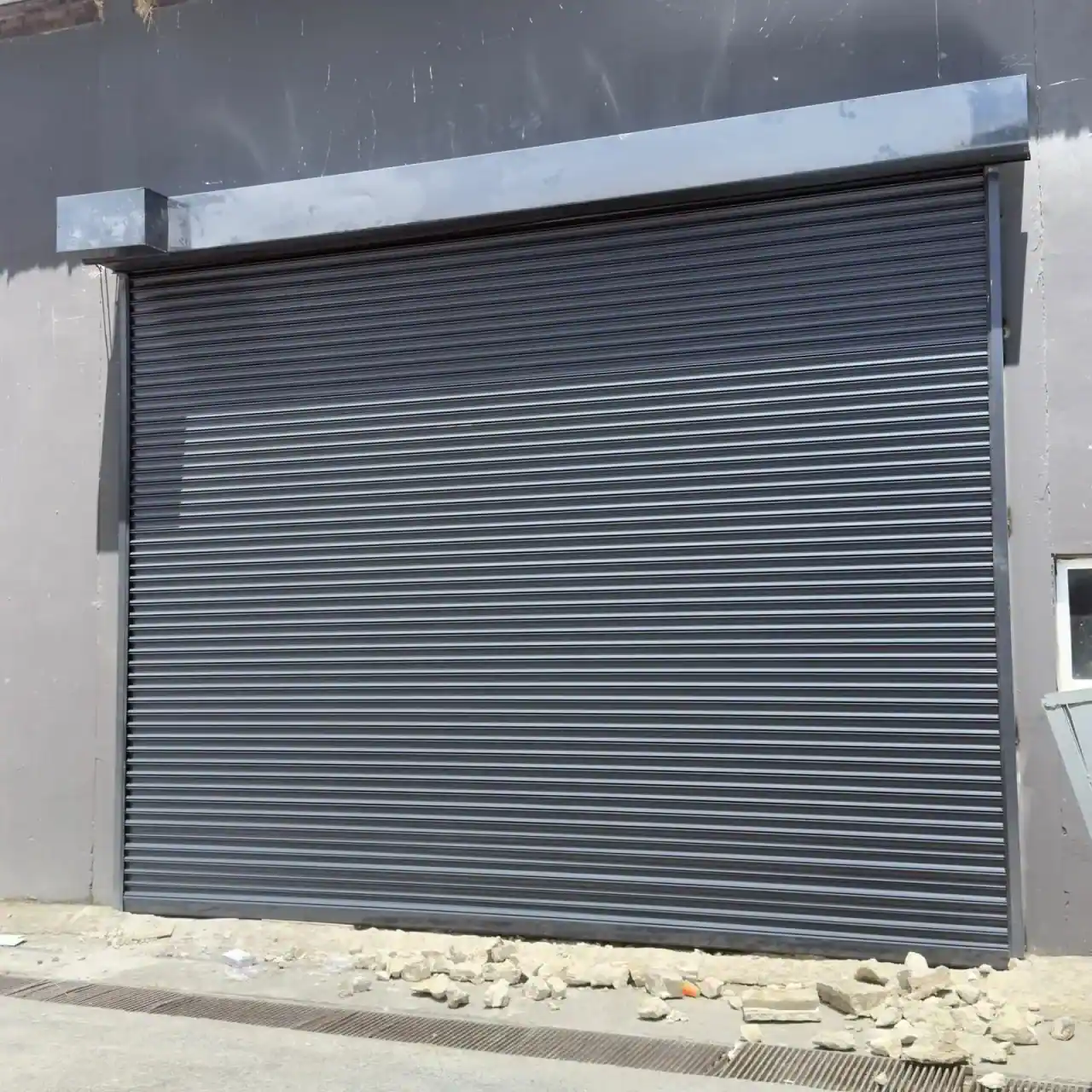
An automatic roller shutter is a closing system made of interlocking slats that roll up onto a barrel at the top. The slats run in guide rails on either side; the guide rails both steer the slats and stop them from being blown out in the wind. The motor is usually a tubular type fitted inside the barrel, so there is no motor housing visible outside and the operating noise stays lower than with chain-driven systems.
Roller shutters are used on street-front stores and shopping mall stores, garages, warehouse and workshop entrances, and small industrial businesses. A shutter’s job is not only to close: it is expected to protect the facade outside opening hours, contribute to thermal and sound insulation, and open quickly in the morning. The motor chosen for a warehouse shutter that opens and closes once a day will not be the same as for a garage shutter that runs dozens of times a day.
The most common mistake with roller shutters is choosing guide rails that are not deep enough for the width of the opening. On a wide opening, shallow guide rails can release the slats in the wind; once a slat comes out of the rail, the system stops working and the slats are damaged as well. That is why the guide rail depth is calculated for each opening, and no standard size is used.
03Types
Types of roller shutters
The difference comes from the slat material and its filling; the motor and guide rail systems are similar.
Polyurethane-filled aluminum roller shutter
The slats are filled with polyurethane, so the shutter stays light while also contributing to thermal and sound insulation. With the store closed, noise from outside is noticeably reduced. It is the most common choice for street-front stores and facades where insulation is expected.
Steel slat roller shutter
It is made from solid steel slats; it is heavy and puts more strain on the motor, but in return it is noticeably more resistant to impact and forcing. It is preferred for garage, warehouse and workshop entrances used by vehicles or forklifts.
Perforated slat roller shutter
Thanks to the holes in the slats, the shop window can be made out from outside when the shutter is closed, and the night lighting stays visible. The higher the proportion of holes, the greater the visibility and the lower the insulation and deterrence. A mixed version can also be made, with a solid lower section and a perforated upper section.
Transparent slat roller shutter
It is made with transparent polycarbonate sections and is used when the whole shop window needs to be visible. It is the option with the lowest insulation, so it is usually combined with solid slats rather than used on its own.
By control type
A key switch is the simplest solution; a remote control lets you open the shutter without getting out of the car. Both can also be installed together. Businesses with many users prefer a keypad.
04From the field
Projects we have completed
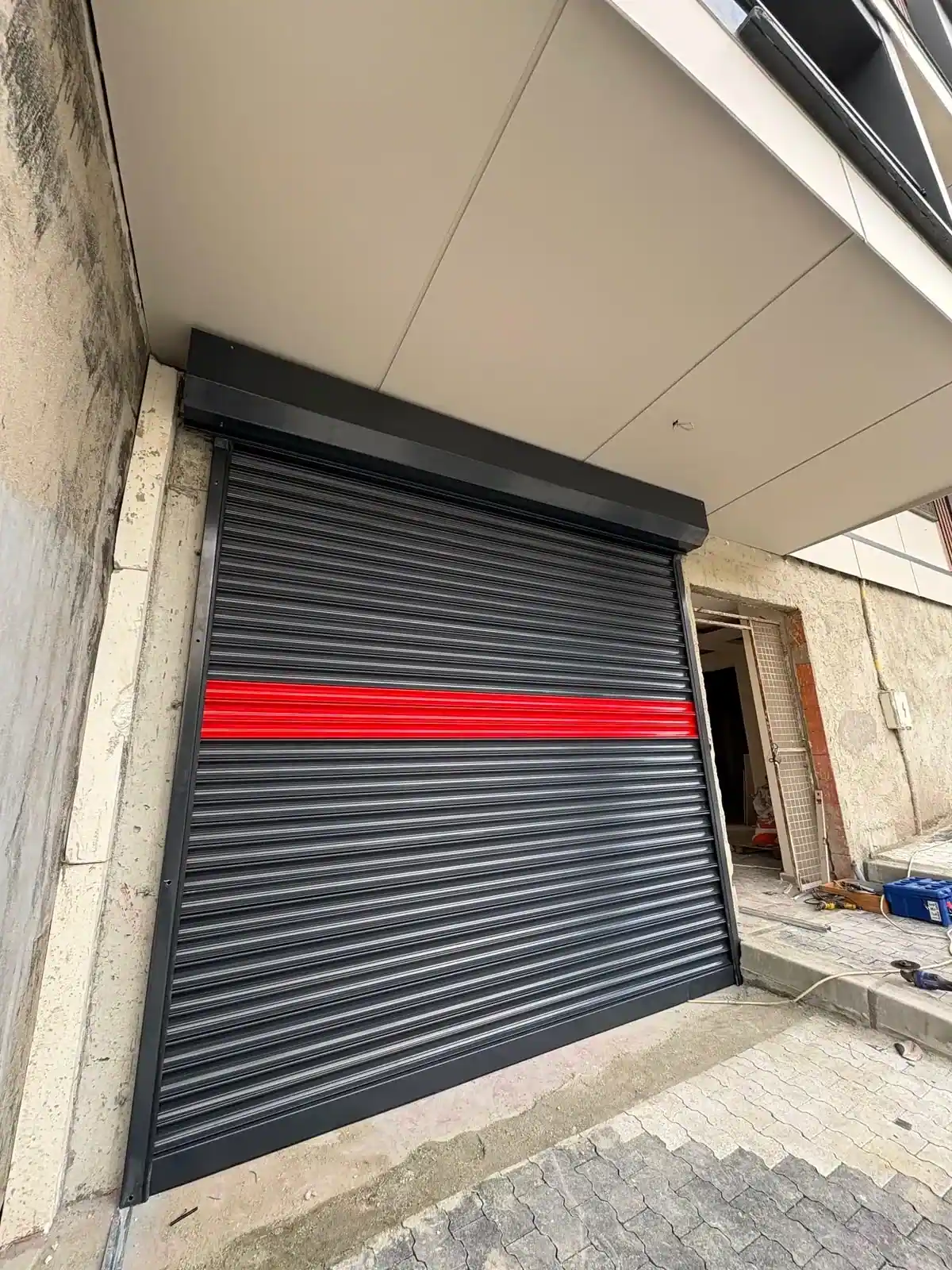
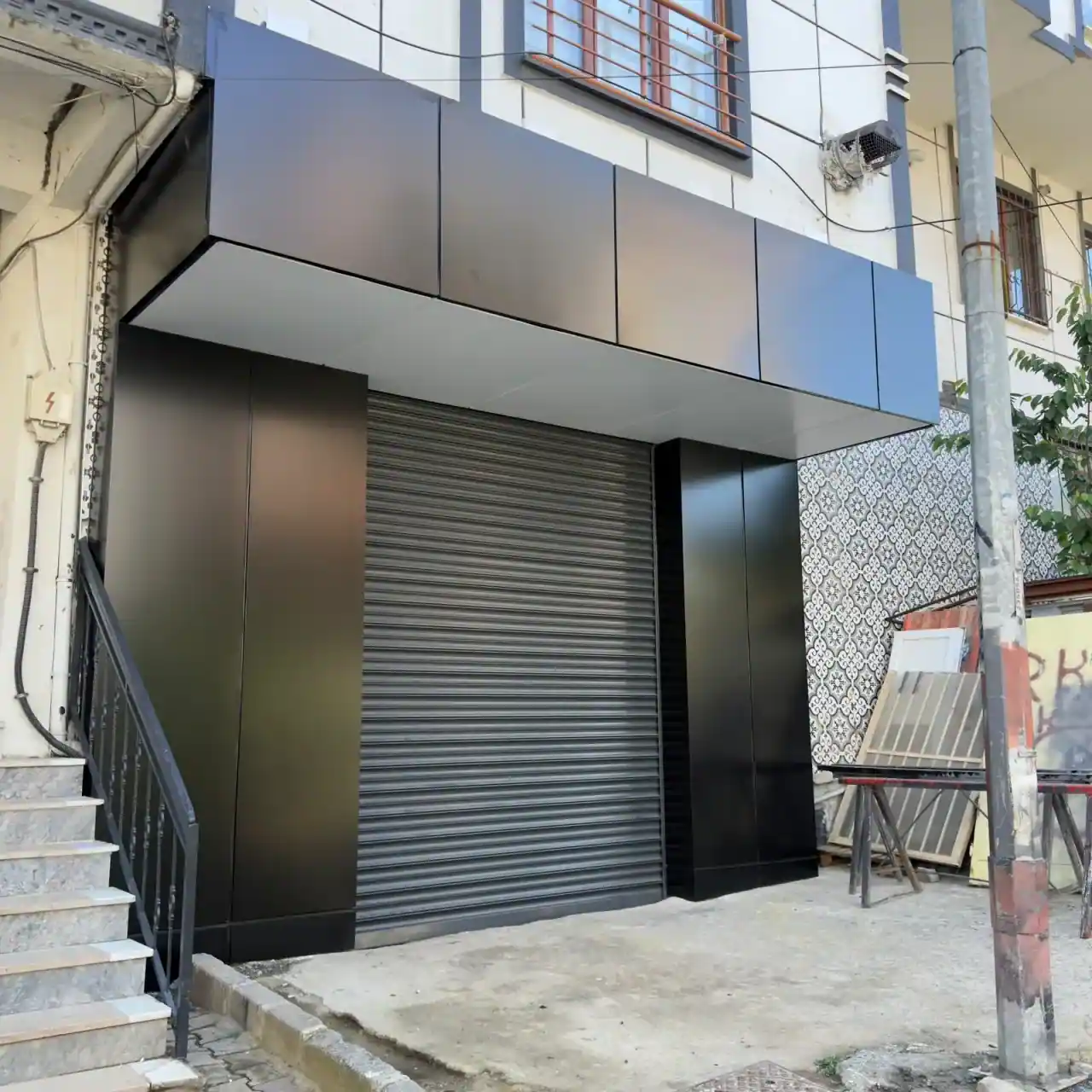
The photos below show Saray Metal’s own work; they are not illustrative images.
Automatic Roller Shutters
Roller shutter
All photos are from Saray Metal’s own projects. Tap a photo to open it uncropped. If you would like to see more, message us on WhatsApp.
05Technical
Materials and technical specifications
The slat section, guide rail depth and motor class are determined for each project according to the width of the opening, the weight of the shutter and frequency of use.
| Slats | Polyurethane-filled aluminum, solid steel or perforated aluminum |
|---|---|
| Motor | Tubular (internal) motor; no motor housing visible outside |
| Guide rails | Depth calculated according to the width of the opening |
| Power outage solution | Manual release chain or pulley — standard |
| Bottom slat | Rubber seal; closes the gap left by level differences in the floor and cushions impact |
| Control | Key switch, remote control or both |
| Safety | Safety photocells optional; recommended at entrances with vehicle and pedestrian traffic |
| Finish | Anodizing or electrostatic powder coating; wood-grain option available |
06Measurements
Measurement and planning
Measuring for a roller shutter is not just a matter of the clear opening: the space above, where the shutter rolls up (lintel height), and the side surfaces where the guide rails will sit are also measured. If there is not enough space above, the roll will not fit, and either the shutter is housed in a box or the height of the opening is reduced.
Level differences in the floor directly affect how the bottom slat sits. On a sloping floor, a straight bottom slat leaves a gap on one side, which causes problems for both security and insulation. A rubber seal closes small differences; for larger ones, the bottom slat is cut to follow the floor.
Clear opening
Width and height are measured at three points. The wider the opening, the larger the guide rail depth and slat section.
Space above (lintel)
The height the roll needs is calculated according to the height of the shutter. If there is not enough, the shutter box is mounted on the outside.
Floor level
The slope is measured and the bottom slat is planned accordingly. A rubber seal closes small differences.
Power supply and switch location
The power supply line and the position of the key switch are decided from the start. The switch is placed where the shutter can be seen from it.
07Hardware
Motor, controls and safety
On a roller shutter, automation is standard; the real decisions are the control type and the power outage solution.
Tubular motor
It fits inside the roll, so no motor housing is visible outside and the operating noise is low. Its power is chosen according to the weight of the shutter.
Manual release
A chain or pulley that lets you lower and raise the shutter by hand during a power outage. Without this part, the premises are stuck either shut or open during an outage.
Remote control
It lets you open the shutter without getting out of the car and is the most requested feature for garages. It can also be installed alongside a key switch.
Safety photocells
They stop the movement when they detect an obstacle in the closing direction. We recommend installing them at entrances with vehicle and pedestrian traffic.
Bottom slat safety edge
It stops the system if it touches an obstacle while closing. Used together with photocells, it noticeably increases safety.
08Process
From site survey to handover
Every job goes through the same seven steps. When one of them is skipped, the problem usually shows up not during installation but at the end of the first year.
- 01
Site survey
Measurements are taken on site; we see the opening, level differences, ground conditions and any existing structure. The dimensions on paper almost never match those on site exactly.
- 02
Design and drawings
A technical drawing is prepared from the measurements. Infill divisions, profile sections and any automation layout are finalized at this stage.
- 03
Approval
The drawing and the color and material choices are approved in writing. Because a change after approval means reversing fabrication, this step is not rushed.
- 04
Fabrication
Cutting, bending and welding are done in our workshop in Arnavutköy. Weld seams are ground flush with the surface.
- 05
Surface treatment
The surface is prepared by sandblasting and primed, then electrostatic powder coating is applied. For parts that will stay outdoors, galvanizing comes into play.
- 06
Installation
On site, the work is anchored, aligned and, if needed, welded in place. If there is automation, the electrical connection and photocell adjustment are completed the same day.
- 07
Handover
Operation is checked, and use and maintenance are explained. Remote controls are programmed, locks are handed over and any phone app is set up at this stage.
09Price
What determines the price?
In a roller shutter quote, the area of the opening is the basic item, but differences in slat type and hardware noticeably change the total.
Opening area
Width × height; this directly determines the quantity of slats and the motor class.
Slat type
Polyurethane-filled aluminum, solid steel and perforated slats are different items.
Motor class
Chosen according to the weight of the shutter and the number of cycles per day.
Control hardware
The key switch, remote control, keypad and photocells are each priced separately.
Box and guide rails
If there is not enough space above, an external box is needed; on wide openings, the guide rail depth increases.
Installation conditions
Working at height, running a power line or reinforcing the lintel enlarges the scope.
10Maintenance
Maintenance and service life
The guide rails are at the heart of roller shutter maintenance. Dust, sand and leaves collecting in the guide rails make it harder for the slats to move and put needless strain on the motor; sweeping them out once a year and going over them with a silicone-based lubricant noticeably extends service life. Oil-based products should not be used, as they draw dust in.
The slat surface is washed with fresh water; on street-facing facades, grime from traffic builds up and wears down the anodized or painted surface. The manual release chain should be tested once a year — trying it for the first time during an outage often means it is already too late. When the rubber seal on the bottom slat wears out, it can be replaced on its own without affecting the rest of the shutter.
11FAQ
Frequently asked questions about Automatic Roller Shutters
Can I open the roller shutter during a power outage?
Yes. A manual release chain or pulley is standard on every installation, so you can lower and raise the shutter by hand. We recommend testing this part once a year, because trying it for the first time during an outage often turns out to be too late.
Should I choose aluminum or steel slats?
It depends on where the shutter will be used. Where insulation matters, as in a street-front store, polyurethane-filled aluminum is the right choice; at garage, warehouse and workshop entrances used by vehicles or forklifts, solid steel slats are. Steel is heavy and needs a more powerful motor.
I want my shop window to be visible when the shutter is closed.
Perforated slats are used for this: with the shutter closed, the interior can be made out, and the window lighting stays visible through the night. For high-value goods, we recommend a mixed version with a solid lower section and a perforated upper section.
Can I have a motor fitted to my existing roller shutter?
If the slats and guide rails are in good condition, it is possible in most cases. But a shutter that is hard to turn by hand, has bent slats or has come out of its guide rails needs mechanical repair first; a motor does not solve these problems; it just ends up carrying the extra load.
How much noise does a roller shutter make?
Tubular motor systems are noticeably quieter than chain-driven systems. Most of the noise comes not from the motor but from dirty or dry guide rails; with regular guide rail maintenance, the operating noise stays low.
I have no room at the top for the roll — what can be done?
If the lintel height is not enough, the shutter box is mounted on the outside, and the roll sits in a box that is visible on the facade. The other option is to reduce the height of the opening, but this is usually not preferred.
Does a roller shutter need safety photocells?
We recommend them at entrances with vehicle or pedestrian traffic. Used together with the bottom slat safety edge, they noticeably reduce the risk of trapping during closing.
12Related services
Work often done alongside this
14Service areas
Areas we serve for Automatic Roller Shutters
Fabrication takes place in our own workshop in Arnavutköy; delivery and installation are carried out across Türkiye. Each area page describes local conditions and the delivery plan.
14 / Contact
Send us your measurements for Automatic Roller Shutters
Approximate measurements and your district are enough for us to outline the quote. Let’s set the best day for the site survey in the same conversation.