
Mesh Panel Fences
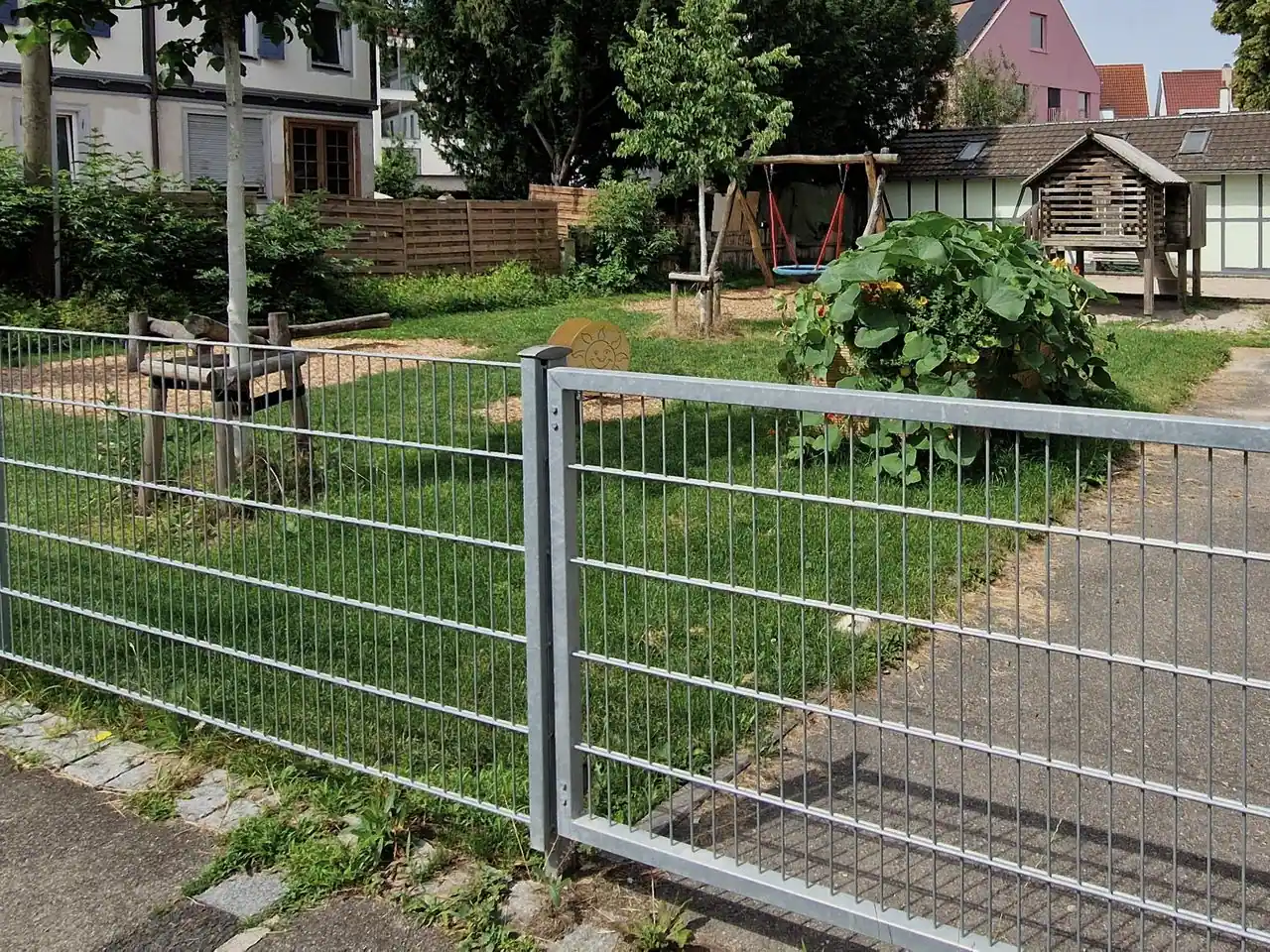
A mesh panel fence is a rigid fencing system made by welding horizontal and vertical wires together, fitted between posts without tensioning. It marks the boundary and prevents passage; it does not block the view.
01Models
Mesh Panel Fences models
Every model has a code. Sending us the code on WhatsApp is enough to make clear which model we are talking about.
02Definition
What is a mesh panel fence, and where is it used?
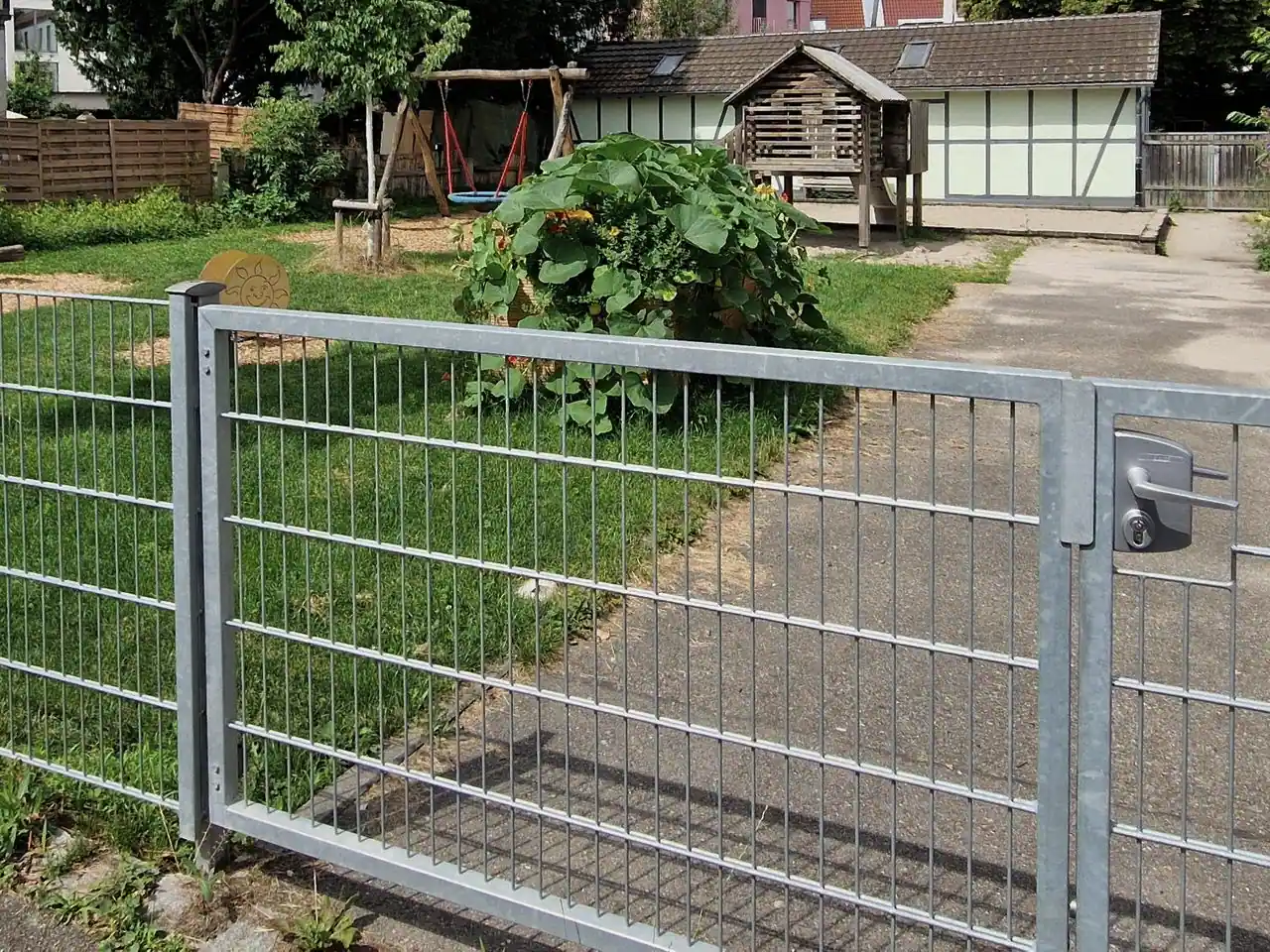
A mesh panel is a rigid sheet made by spot-welding wires that run at right angles to each other at their intersection points. What sets it apart from chain-link and barbed wire is that it does not need tensioning: because the panel is rigid in itself, it is fitted between the posts and fixed, with no tensioning involved. As well as speeding up installation, this eliminates the problem of sagging and slackening over time.
Three things determine a panel’s strength: wire thickness, mesh opening, and horizontal folds. The horizontal ribs (folds) across the surface stiffen the panel in its own plane and increase its resistance to bending. A panel without folds, made from the same wire thickness, deforms markedly more easily than a folded one; that is why looking only at the wire diameter when choosing a panel is misleading.
The range of uses is wide: plot and field boundaries, the perimeters of gated communities and housing developments, factory and warehouse yards, sports grounds, parking lots, facility perimeters, and garden boundaries. On long runs, it is the most economical enclosure solution per square meter. Because it catches almost no wind, posts can be spaced widely and the foundation load is low — a feature that directly brings the cost down.
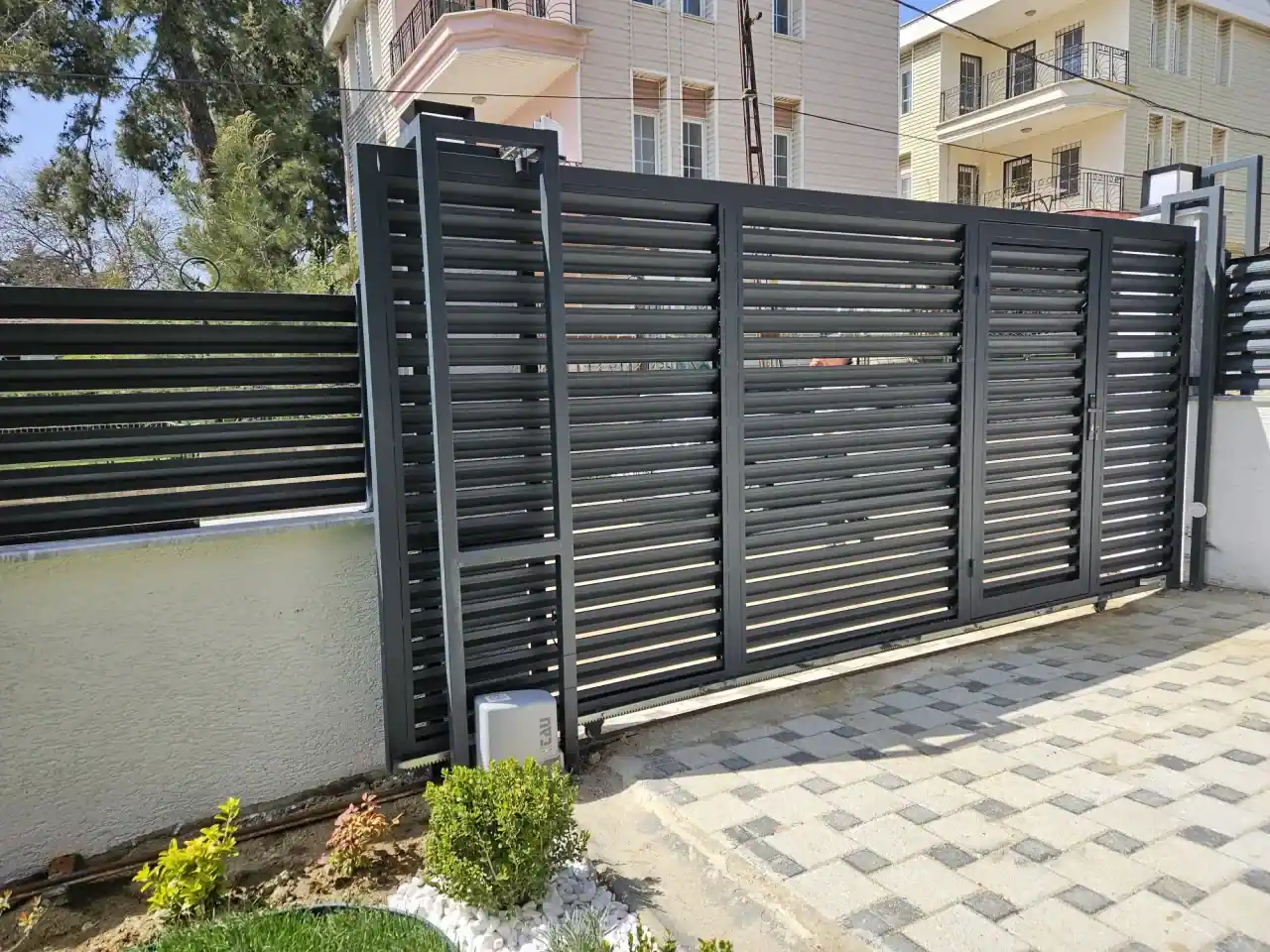
What it does not provide is privacy: a mesh panel fence does not screen what is inside. If you need to mark the boundary and prevent passage, it is the right choice; if you need to screen the garden from the neighbors or the road, a louvered fence or a slatted system should be discussed. We clarify this distinction at the quote stage, because a mismatch in expectations noticed after installation is the most expensive mistake.
03Types
Types of mesh panel fences
The choice depends on the site’s security needs, the slope of the land, and how visible the panels will be.
Galvanized + PVC-coated panel
The most common type. The wire is first galvanized and then coated with PVC; thanks to this two-layer protection, it has a long service life outdoors. The PVC layer also makes it possible to choose a color — green and anthracite are the most frequently chosen shades.
Hot-dip galvanized panel
Protected by galvanizing alone, without a PVC layer. Its metallic gray surface gives an industrial look, and it is preferred for enclosing industrial facilities, organized industrial zones, and work sites. Since there is no coating layer, there is no risk of it peeling off on impact.
High-security panel (narrow mesh)
A panel type with a reduced mesh opening; it makes climbing and cutting by hand more difficult. Used around transformer stations, warehouses, facility entrances, and critical sites. Heavier post sections and stronger anchoring are chosen for this type.
Stepped installation on sloping ground
If the land slopes, the panels are installed in steps down the slope; they are not cut to follow the slope. Step heights and post lengths are calculated for the slope from the start, so the gaps underneath stay under control.
Installation with a concrete curb
A concrete curb or wall is built beneath the panels. It closes off the gap at the bottom completely, stops small animals from getting through, and keeps the bottom of the panel from being exposed when the ground erodes. It comes into its own around fields, gardens, and animal shelters.
04Technical
Materials and technical specifications
Wire diameter, mesh opening, and post section are determined in the design according to the site’s security needs, the panel height, and the ground conditions.
| Panel | Spot-welded rigid wire panel; with horizontal folds |
|---|---|
| Finish | Hot-dip galvanizing or galvanizing + PVC coating |
| Posts | Box section or special profile; according to height and wind load |
| Post spacing | According to panel width; varies with the stepping on sloping ground |
| Installation | Clamped or slotted into the post channel; no tensioning |
| Foundation | Concrete footing or base plate; according to the ground |
| Color | RAL shades on the PVC-coated type; green and anthracite most common |
| Bottom finish | A gap can be left above the ground or closed off with a concrete curb |
05Measurements
Measurement and planning
With a mesh panel fence, measurement is not just the total length of the run. First the route is walked: corner points, level differences, the ground conditions, and anything that interrupts the run (trees, manholes, existing walls, gate openings) are marked one by one. A quote based on total meters will inevitably change on site, because it does not account for any of these points.
The second decisive factor is the ground. If the posts are to be set in concrete footings, the ground needs to be diggable; if the fence is going on top of existing concrete or a wall, a base plate and anchor solution is used. On rocky ground the excavation depth and method change, and this is reflected directly in the time and cost. That is why we look at the ground conditions on site during the survey.
Route and number of corners
The run is walked; corners, gate openings, and anything that interrupts the run are marked. Every corner means a separate post and a separate detail.
Level difference and slope
On sloping ground, step heights and post lengths are calculated from the start; the panels are not cut to follow the slope.
Ground conditions
Whether concrete footings or base plates will be used depends on the ground. On rocky ground the excavation method changes.
Gates and access points
Where along the run the pedestrian and vehicle openings will be, and how wide they will open — these directly affect the panel layout.
06Process
From site survey to handover
Every job goes through the same seven steps. When one of them is skipped, the problem usually shows up not during installation but at the end of the first year.
- 01
Site survey
Measurements are taken on site; we see the opening, level differences, ground conditions and any existing structure. The dimensions on paper almost never match those on site exactly.
- 02
Design and drawings
A technical drawing is prepared from the measurements. Infill divisions, profile sections and any automation layout are finalized at this stage.
- 03
Approval
The drawing and the color and material choices are approved in writing. Because a change after approval means reversing fabrication, this step is not rushed.
- 04
Fabrication
Cutting, bending and welding are done in our workshop in Arnavutköy. Weld seams are ground flush with the surface.
- 05
Surface treatment
The surface is prepared by sandblasting and primed, then electrostatic powder coating is applied. For parts that will stay outdoors, galvanizing comes into play.
- 06
Installation
On site, the work is anchored, aligned and, if needed, welded in place. If there is automation, the electrical connection and photocell adjustment are completed the same day.
- 07
Handover
Operation is checked, and use and maintenance are explained. Remote controls are programmed, locks are handed over and any phone app is set up at this stage.
07Price
What determines the price?
With mesh panel fences, the conversation is about price per meter, but what determines the total is how regular the run is: the more corners, level differences, and openings there are, the more labor there is per meter.
Run length
The basic item that directly determines the quantity of panels and posts.
Panel height
As the height increases, the panel area, the post section, and the foundation load all grow.
Wire diameter and mesh opening
Sites that require high security call for a narrow mesh and thick wire.
Finish
Galvanizing alone and galvanizing + PVC coating fall into different cost classes.
Ground and foundation
Diggable ground, rocky ground, and existing concrete each require different labor.
Number of corners and openings
Every corner and every gate opening means a separate post, a separate detail, and separate labor.
Concrete curb
Closing off the gap at the bottom is a separate fabrication item.
08Maintenance
Maintenance and service life
The routine maintenance of a galvanized + PVC-coated mesh panel fence is next to nothing; the rain cleans the surface, and it does not need painting. The only periodic check needed is to look over any spots where the coating has been damaged. Scrapes from impacts, climbing, or construction work break through the PVC layer; at that spot the galvanizing still protects, but the service life is shortened. These spots should be touched up with a suitable repair paint.
The second point to check is the base of the posts. Soil and water collecting where the concrete footing meets the ground create, in the long run, an environment that favors corrosion; the base of the post should not be covered with soil, and water should not pool there. On sloping ground, soil carried by rain gradually fills in or washes out the areas beneath the steps; a visual check once a year is enough.
09FAQ
Frequently asked questions about Mesh Panel Fences
Does a mesh panel fence screen what is inside?
No. A mesh panel fence marks the boundary and prevents passage, but it does not block the view. If you want to screen your garden from the road or the neighbors, we need to discuss a louvered fence or a slatted system. We clarify this distinction at the quote stage.
How is it different from chain-link?
Chain-link is installed under tension and loses that tension over time; sagging and slackening are common problems. Because a mesh panel fence is rigid in itself, it needs no tensioning; it is fitted to the posts and fixed. Visually, it also gives a neater line.
My land slopes — can it be installed?
Yes. On sloping ground, the panels are installed in steps down the slope. They are not cut to follow the slope; step heights and post lengths are calculated for the slope from the start. This keeps the gaps underneath under control, and the run looks neat.
How long does it last?
A galvanized + PVC-coated panel has two layers of protection, so it has a long service life outdoors and does not need painting. What shortens its life is not the material but leaving damaged spots in the coating unrepaired. We do not give an exact number of years, because service life varies with location, climate, and use.
Does it stop animals from getting under it?
In a standard installation, some ground clearance remains under the panel. If small animals need to be kept out, a concrete curb is built underneath or the panel is installed closer to the ground. Around fields, gardens, and animal shelters, we recommend the installation with a curb.
Can it be installed on top of my existing wall?
Yes, this is a common installation. Instead of being set in concrete footings, the posts are fixed to the top of the wall with base plates and anchors. Whether the wall can carry this load and how even its top surface is are checked at the survey; on worn or thin walls, the anchoring solution changes.
Do you make gates as well?
Yes. For pedestrian and vehicle openings along the run, we fabricate gates from the same series, so the gate and the fence share the same color, the same infill, and the same surface treatment. The vehicle gate can be planned as a sliding gate or a double-leaf swing gate; which one is suitable depends on the maneuvering space in front of the opening.
Can I choose the color?
On the PVC-coated type, yes; green and anthracite are the most frequently chosen shades, and other colors from the RAL chart are also possible. On the galvanized-only type, the surface stays metallic gray and is not painted — the very reason this type is chosen is its durability without a coating.
10Guides
Read before you decide
Topics that come up often at the decision stage and fall outside the technical scope of this page.
11Related services
Work often done alongside this
14Service areas
Areas we serve for Mesh Panel Fences
Fabrication takes place in our own workshop in Arnavutköy; delivery and installation are carried out across Türkiye. Each area page describes local conditions and the delivery plan.
14 / Contact
Send us your measurements for Mesh Panel Fences
Approximate measurements and your district are enough for us to outline the quote. Let’s set the best day for the site survey in the same conversation.