
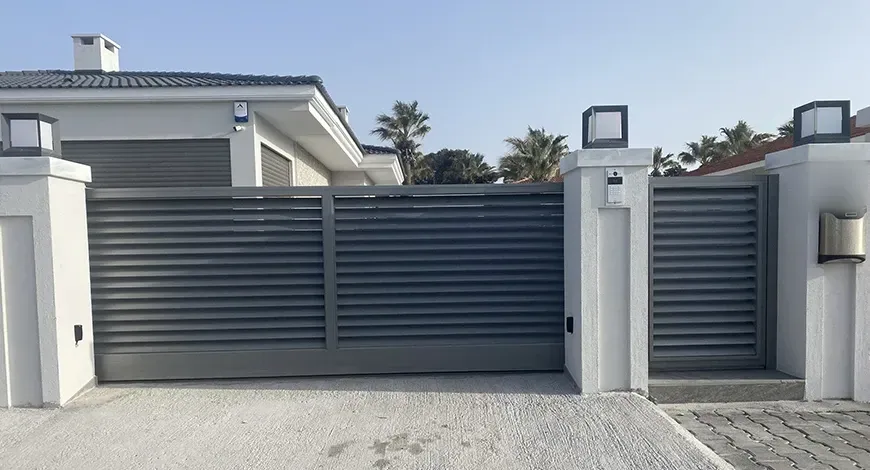
Automatic Villa Gates
An automatic villa gate is created by adding a motor, safety equipment and a control layer to a new or existing garden gate. Installed correctly, the gate opens by remote control, the safety photocells halt the closing movement, and in a power outage the gate can still be operated by hand.
01Models
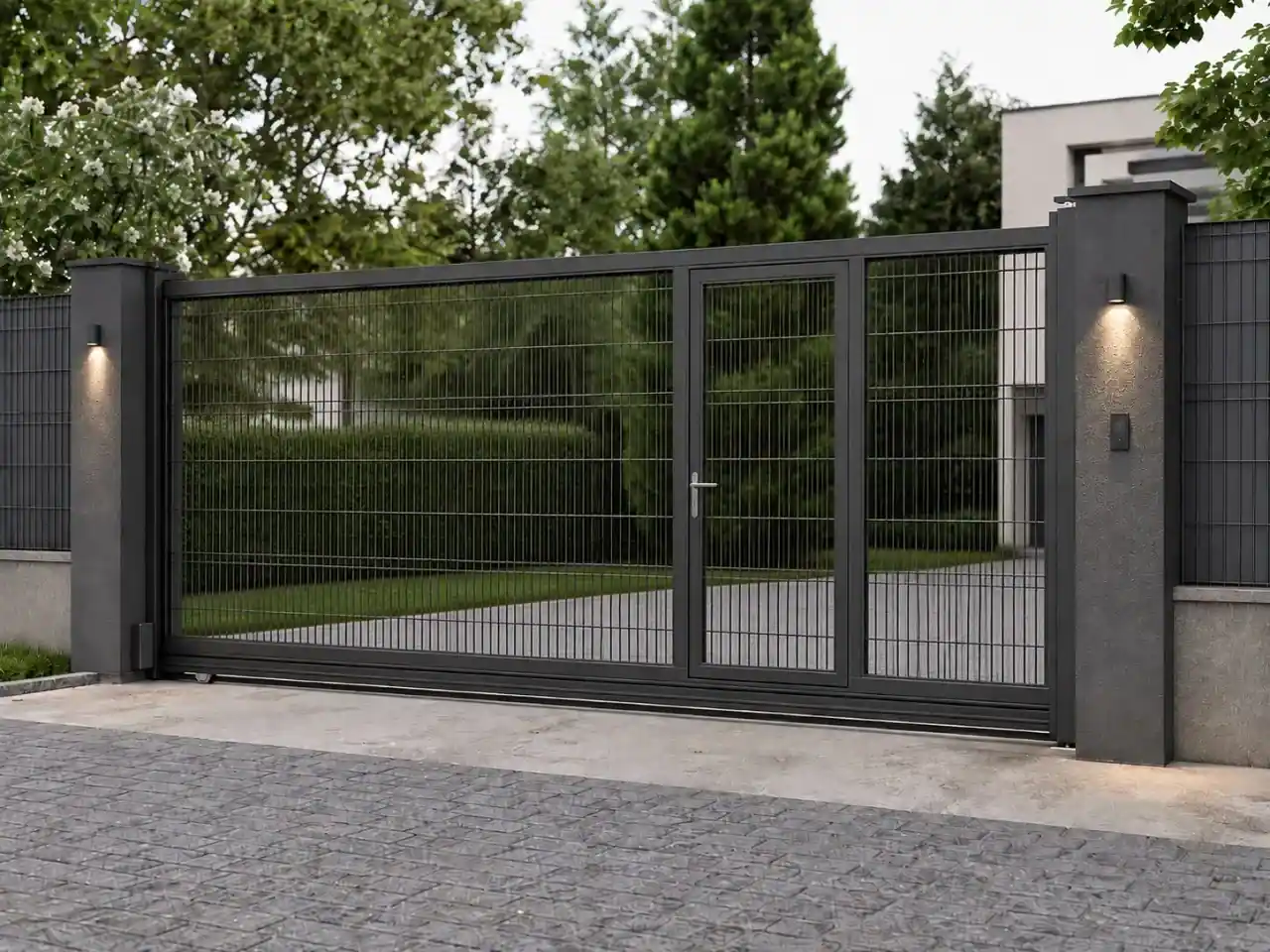
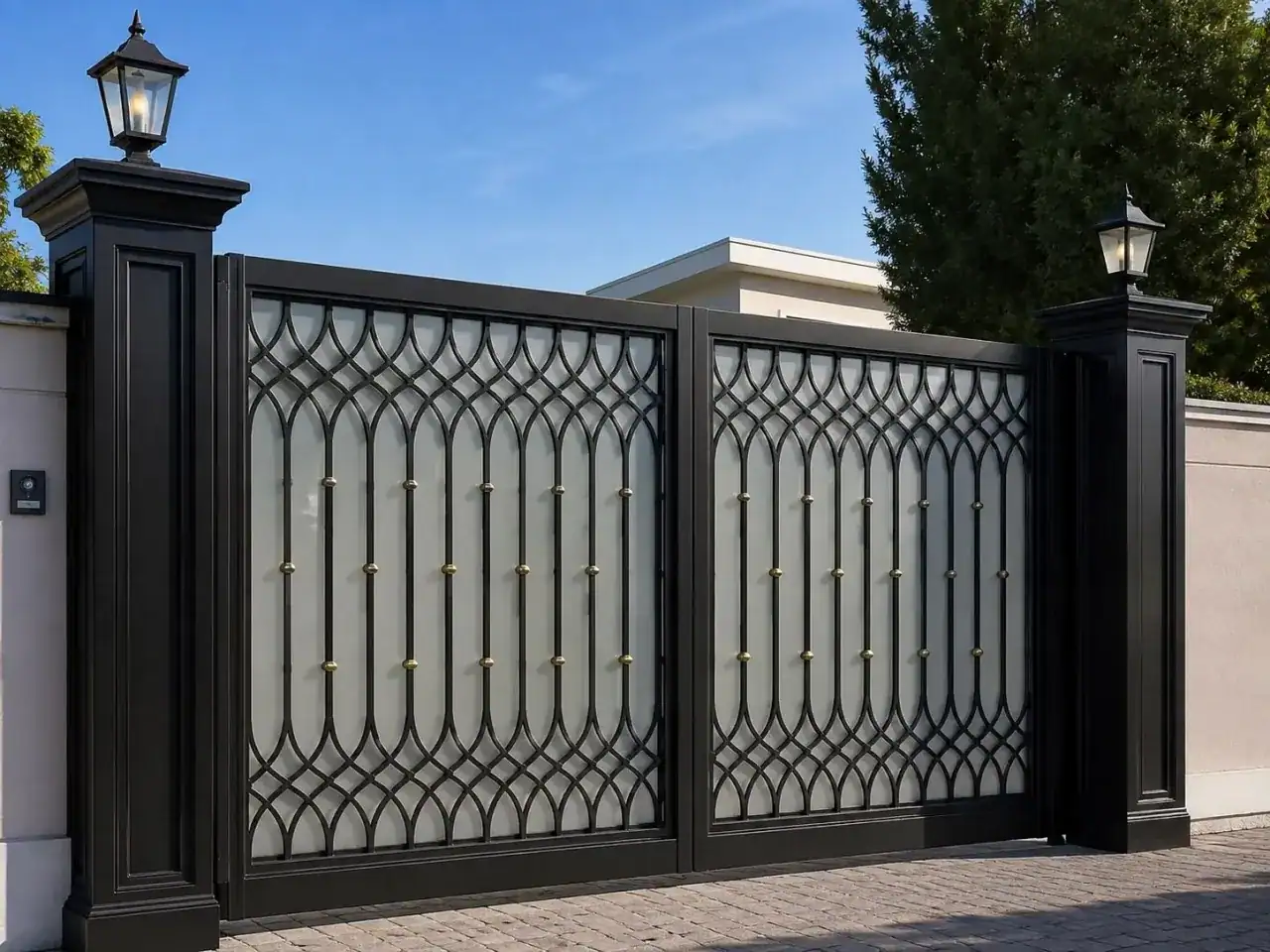
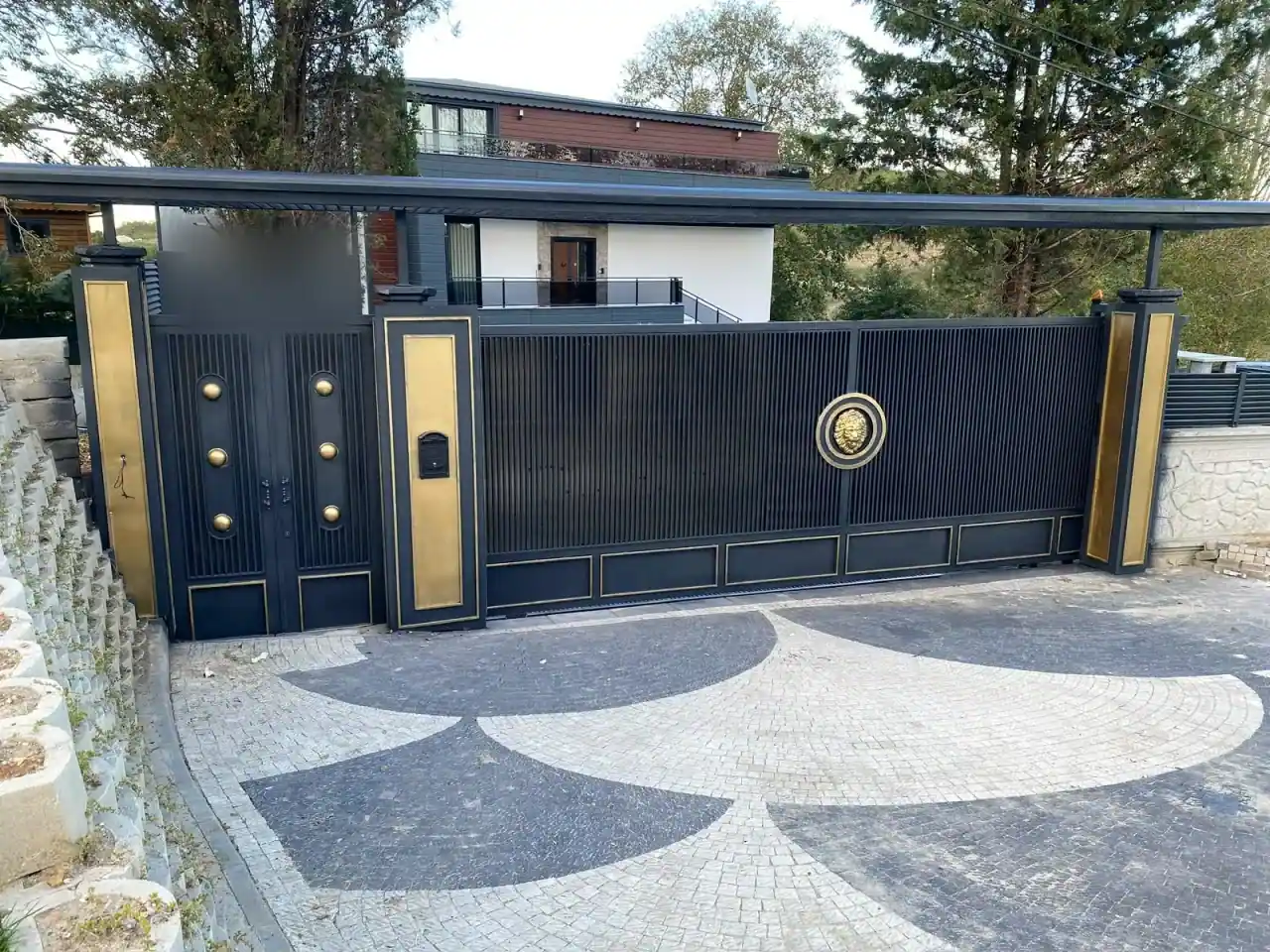
Automatic Villa Gates models
Every model has a code. Sending us the code on WhatsApp is enough to make clear which model we are talking about.
02Definition
What is an automatic villa gate, and how does it work?
An automatic gate is three layers working together: the gate itself, the motor that moves it and the equipment that makes the movement safe. If any one of the three is missing or wrongly chosen, the system either does not work or does not work safely. On sliding gates, the motor turns its gear along a rack screwed to the gate’s bottom rail, sliding the gate sideways; on swing gates, a ram (piston) or articulated-arm motor attached to each leaf pushes and pulls it.
Automatic gates are used on villas, residential complex entrances, farmhouses and vineyard houses, and the garden entrances of small businesses. Being able to open the gate in the rain without getting out of the car, security at night and accessibility for people with disabilities are the reasons we hear most often. The system can be installed with a new gate, or added to an existing gate in good mechanical condition.
The most misunderstood aspect of automation is the expectation that the motor will solve problems. A gate that is hard to push by hand, whose track has sunk or whose hinges have worked loose will be just as hard for a motor; the difference is that the load is now carried by the motor instead of you, and a motor cannot carry that load for long. That is why we begin every automation job by checking the mechanical condition of the gate.
03Types
Automatic gate systems
The system is chosen according to how the gate opens. Unless the gate type changes, the motor type does not change.
Motorized sliding gate system
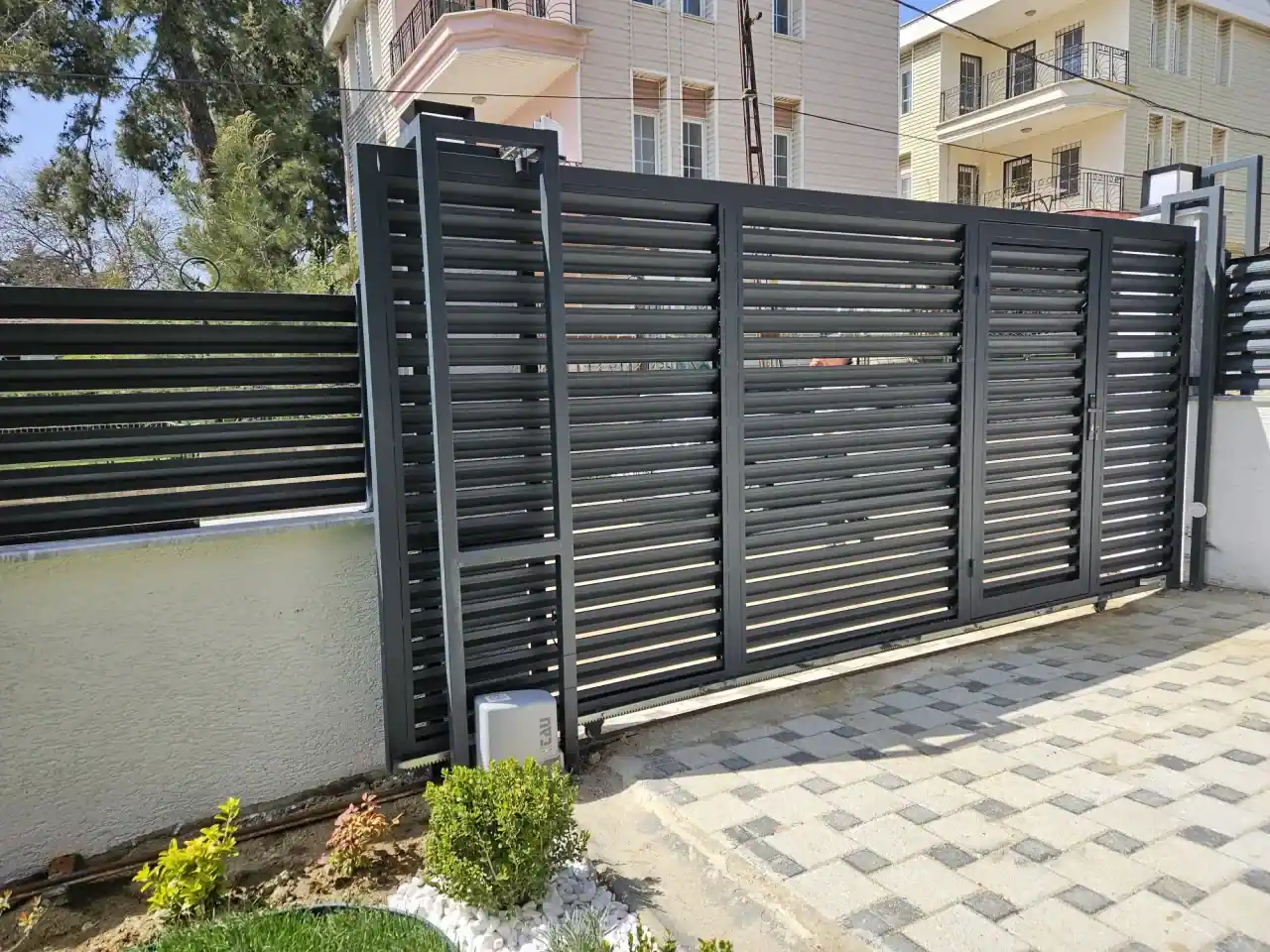
It works with a gear rack drive. Motor power is chosen according to the gate’s weight; an undersized motor struggles on a frozen track in winter and wears out its gear within a few seasons. It is the most common and most trouble-free solution for wide openings.
Motorized double-leaf swing system
A motor is attached to each leaf and the leaves move in sequence; this sequencing keeps the leaves from striking each other as they close. Ram-type motors are preferred on narrow posts, and articulated-arm motors when the post is thick or the leaf sits away from the post.
Cantilever sliding system
With no track on the ground, the gate is carried clear of it; the motor still works with a gear rack, but the load on the roller carriages is higher. It is preferred on villas that want a threshold-free entrance and do not want to deal with keeping a ground track clean.
Pedestrian gate integration
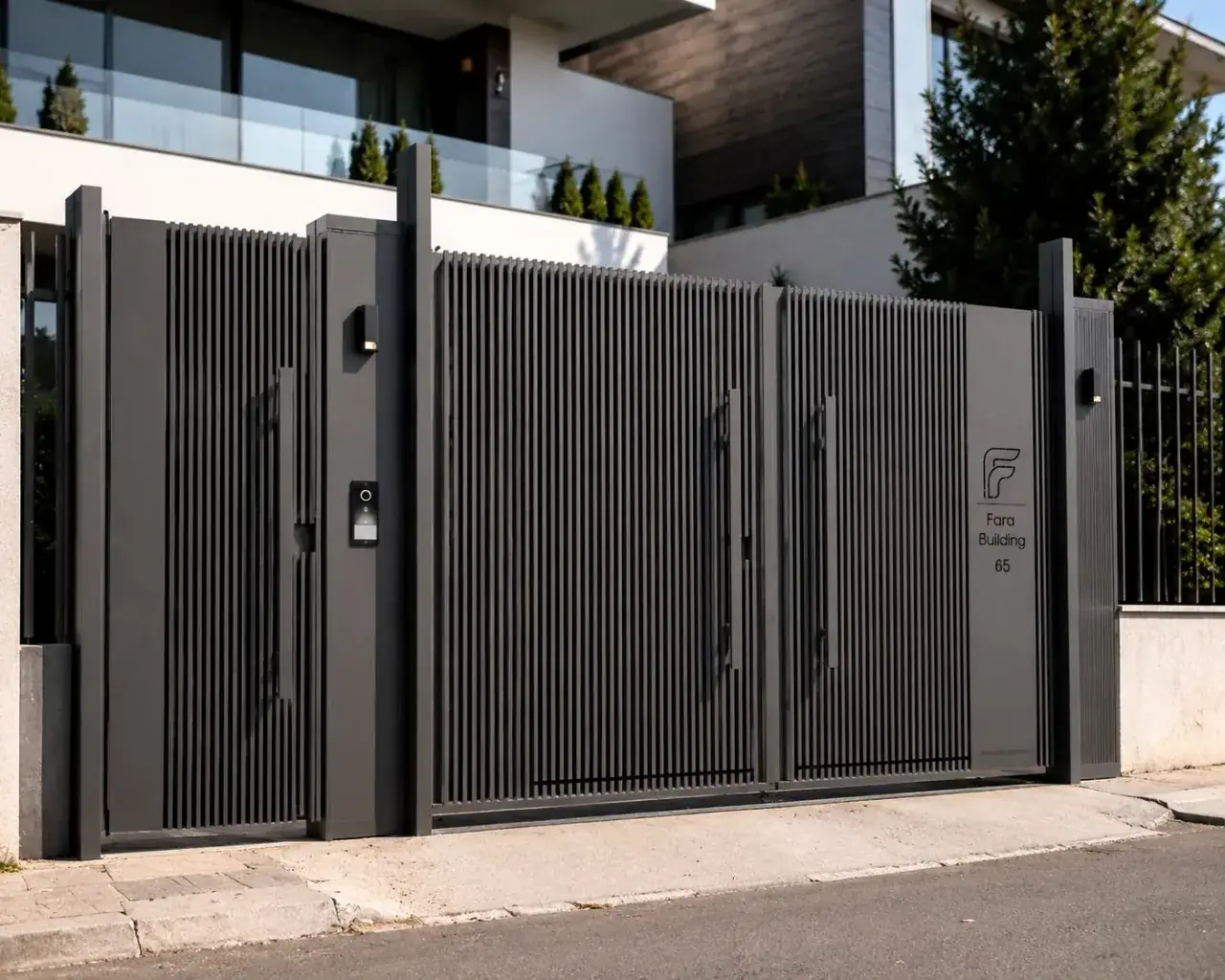
The electric lock on the pedestrian gate can be paired with the same remote control or the same phone app as the driveway gate. That way, both pedestrian and vehicle access for guests is managed from a single button.
Control layer
Remote control, keypad, card access or Wi-Fi module. The level of control is chosen according to the number of users; at a single-family entrance, multi-user authorization adds unnecessary complexity.
04From the field
Projects we have completed
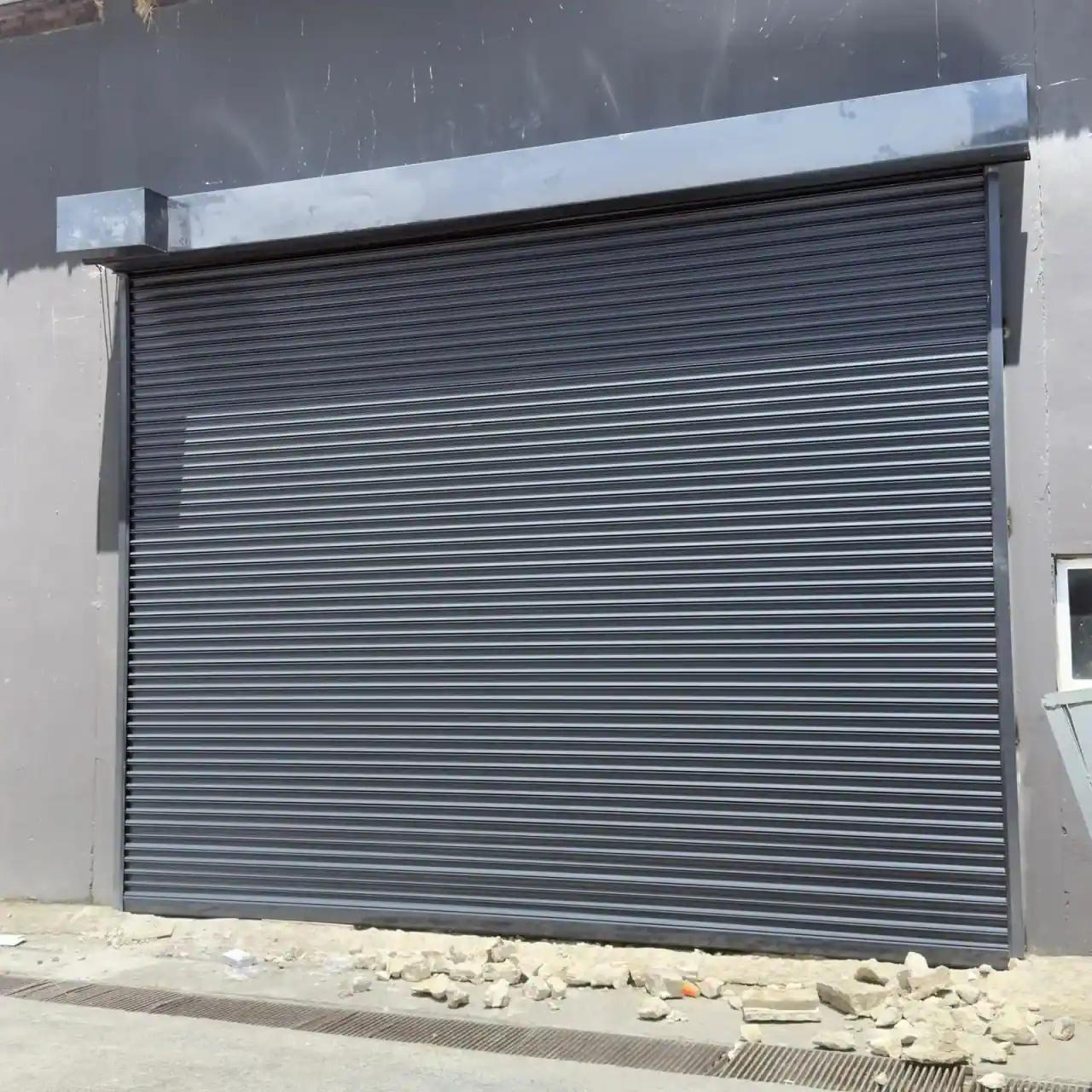
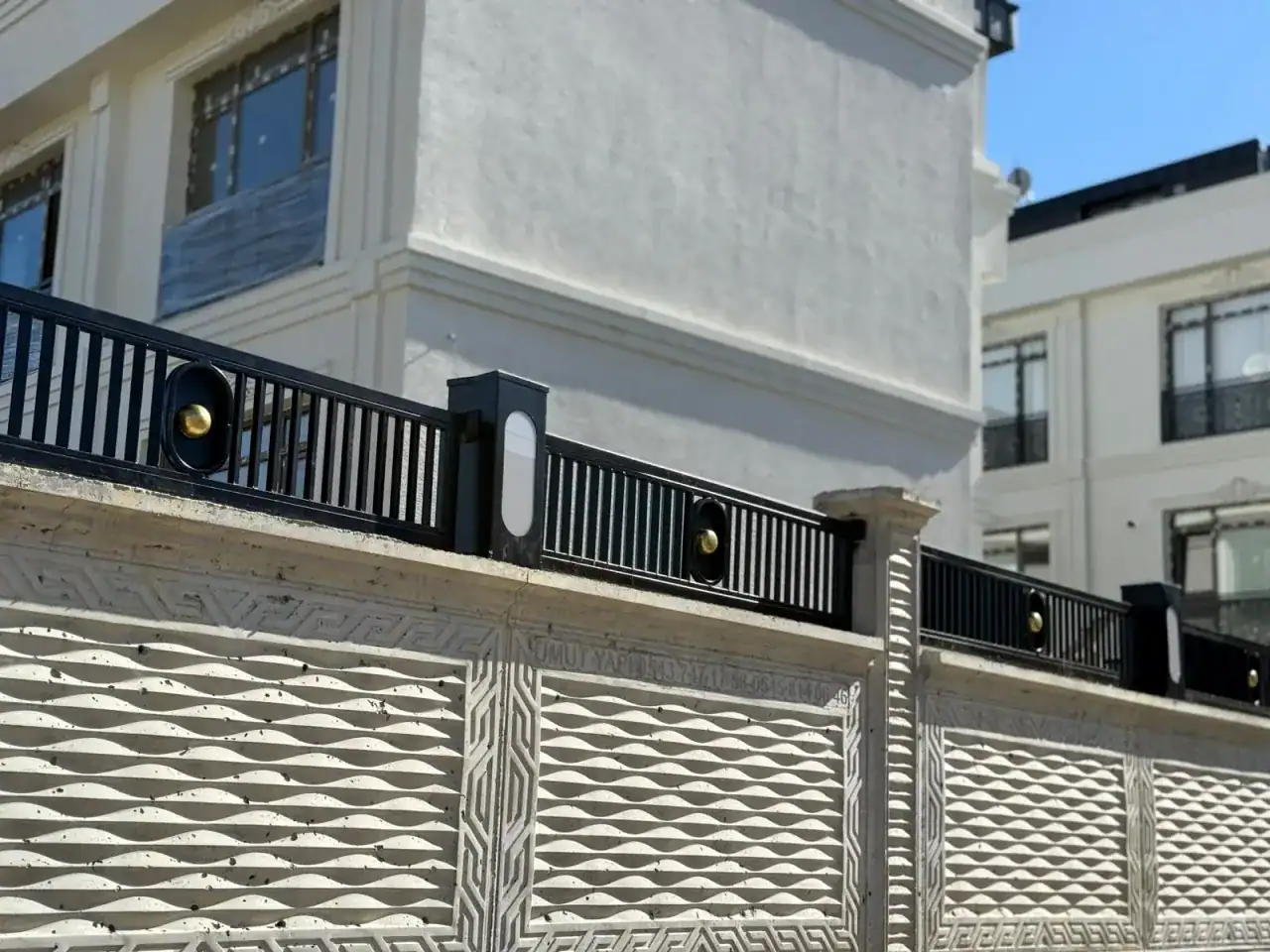
The photos below show Saray Metal’s own work; they are not illustrative images.
Automatic Villa Gates
Villa driveway gate
All photos are from Saray Metal’s own projects. Tap a photo to open it uncropped. If you would like to see more, message us on WhatsApp.
05Technical
Hardware and technical specifications
The motor class and hardware are selected for each project according to gate weight, the opening and frequency of use.
| Sliding drive | Gear rack; motor power according to gate weight |
|---|---|
| Swing drive | Ram or articulated-arm motor; one per leaf |
| Safety | Safety photocells (mandatory) + warning light; standard on every installation |
| Remote controls | Multiple remotes can be paired; a lost remote can be deleted individually |
| Remote access | Optional Wi-Fi module; opening from your phone and a log of openings |
| Power outage solution | Manual release key as standard; battery backup optional |
| Electrical | A dedicated supply line and grounding are recommended |
| Application | With a new gate, or retrofitted to an existing gate |
06Measurements
Site survey and planning
In automation work, the site survey is less about taking measurements than assessing condition. How easily the gate moves by hand, the condition of the track or hinges, how solid the posts are and where the electrical supply is located are all established before the motor is chosen.
If a motor is to be added to an existing gate, the gate’s weight and balance are measured. If the gate sags in the middle, leans to one side or has worn wheels, mechanical maintenance comes first. If this maintenance is skipped, the motor warranty also becomes meaningless in practice.
Mechanical condition of the gate
If the gate is hard to push by hand, this is fixed before the motor is fitted. Track cleaning, wheel replacement or hinge adjustment is done at this stage.
Post and column strength
In a swing system, the post also takes load as the motor pushes the leaf. A wobbly post will soon make the leaf drop once the motor is attached.
Power line
A dedicated supply line and grounding are recommended for the motor. The photocell cables are planned to reach both sides of the gate.
Photocell placement
They are placed on either side of the opening, close to the height of a car bumper. A photocell that has gone out of alignment keeps stopping the gate; we recommend checking them once a year.
07Hardware
Safety equipment
An automatic gate is a heavy, moving structure. The equipment below is a matter of safety, not comfort.
Safety photocells
When they detect an obstacle in the closing direction, they stop or reverse the movement. We do not install a system without photocells at any entrance used by children, pets or vehicles.
Warning light
It gives a visual warning while the gate is moving. At night and at entrances on narrow streets, it noticeably reduces the risk of collision.
Force adjustment
The pushing force the motor can apply is limited, and if it hits an obstacle, it pulls back. The setting is made during installation and calibrated to the gate’s weight.
Manual release
The key on the motor releases the system so the gate can be pushed by hand. This part is what keeps your car from being shut in or shut out during a power outage.
Battery backup
It is added in locations where outages are frequent; the gate continues to run a limited number of cycles during the outage.
08Process
From site survey to handover
Every job goes through the same seven steps. When one of them is skipped, the problem usually shows up not during installation but at the end of the first year.
- 01
Site survey
Measurements are taken on site; we see the opening, level differences, ground conditions and any existing structure. The dimensions on paper almost never match those on site exactly.
- 02
Design and drawings
A technical drawing is prepared from the measurements. Infill divisions, profile sections and any automation layout are finalized at this stage.
- 03
Approval
The drawing and the color and material choices are approved in writing. Because a change after approval means reversing fabrication, this step is not rushed.
- 04
Fabrication
Cutting, bending and welding are done in our workshop in Arnavutköy. Weld seams are ground flush with the surface.
- 05
Surface treatment
The surface is prepared by sandblasting and primed, then electrostatic powder coating is applied. For parts that will stay outdoors, galvanizing comes into play.
- 06
Installation
On site, the work is anchored, aligned and, if needed, welded in place. If there is automation, the electrical connection and photocell adjustment are completed the same day.
- 07
Handover
Operation is checked, and use and maintenance are explained. Remote controls are programmed, locks are handed over and any phone app is set up at this stage.
09Price
What determines the price?
An automation quote depends as much on the equipment around the motor and the current condition of the gate as on the motor itself. The deciding factors:
Gate weight and opening
These directly determine the motor class; a heavy gate needs a more powerful motor.
Opening type
A double-leaf gate needs two motors; with a cantilever sliding gate, the load on the supporting hardware is higher.
Safety equipment
Photocells and a warning light are standard; an additional pair of photocells or barrier equipment adds further items.
Control level
The number of remotes, a keypad, card access and the Wi-Fi module are each priced separately.
Condition of the existing gate
If track, wheel or hinge maintenance is needed, this work is added to the scope.
Electrical infrastructure
If a supply line has to be run and grounding installed, the scope grows.
10Maintenance
Maintenance and service life
Maintenance on an automatic gate falls under two headings: mechanical and electronic. On the mechanical side, cleaning the track, lubricating the wheels and hinges and checking the gear rack are done once a year. Sand and stones collecting on the track wear out the gear before the motor itself wears out.
On the electronic side, photocell alignment and lens cleaning are the tasks needed most often; a dirty photocell keeps stopping the gate, and users often mistake this for a motor fault. Remote control batteries are replaced every one to two years on average. If there is battery backup, the battery also needs checking at regular intervals; a battery that is not used loses capacity over time.
11FAQ
Frequently asked questions about Automatic Villa Gates
Will an automatic villa gate open during a power outage?
Yes. Every motor has a manual release key; the key releases the motor so the gate can be pushed by hand. In locations where outages are frequent, battery backup can also be added; the gate then continues to run a limited number of cycles during the outage.
Can I have a motor fitted to my existing gate?
In most cases, yes. The decision rests on three things: the weight of the leaf, the condition of the track and hinges, and whether the gate catches when pushed by hand. A gate that is hard to move by hand will be just as hard for a motor; we carry out mechanical maintenance first and, if needed, recommend replacing the track or wheels.
Are safety photocells essential?
For us, they are. Photocells are the only equipment that stops the movement when an obstacle is detected in the closing direction. We do not install a system without photocells at any entrance used by children, pets or vehicles — this is not a line item on the price, it is a safety requirement.
Can I open the gate from my phone?
Yes, once a Wi-Fi module is added. The gate opens from your phone, every opening is logged, and separate permissions can be given to multiple users. For the module to work, a reliable network connection is needed where the gate is located.
I have lost my remote — what should I do?
A lost remote can be deleted from the receiver individually; there is no need to reset the whole system. With cheap receivers that lack this feature, every remote has to be paired again each time one is lost, which is why we pay attention to this at installation.
How long does the motor take to open the gate?
The time depends on the gate’s weight, the width of the opening and the motor class. Faster is not always better: a heavy gate that closes quickly increases the safety risk. We calibrate the force and speed settings to each gate.
I want to drive in without getting out of the car when it rains — will this do it?
Yes, that is the basic use case. The remote’s range is set so that it can open the gate as you approach; if you wish, a fixed in-car remote can also be paired.
12Guides
Read before you decide
Topics that come up often at the decision stage and fall outside the technical scope of this page.
13Related services
Work often done alongside this
14Service areas
Areas we serve for Automatic Villa Gates
Fabrication takes place in our own workshop in Arnavutköy; delivery and installation are carried out across Türkiye. Each area page describes local conditions and the delivery plan.
14 / Contact
Send us your measurements for Automatic Villa Gates
Approximate measurements and your district are enough for us to outline the quote. Let’s set the best day for the site survey in the same conversation.