
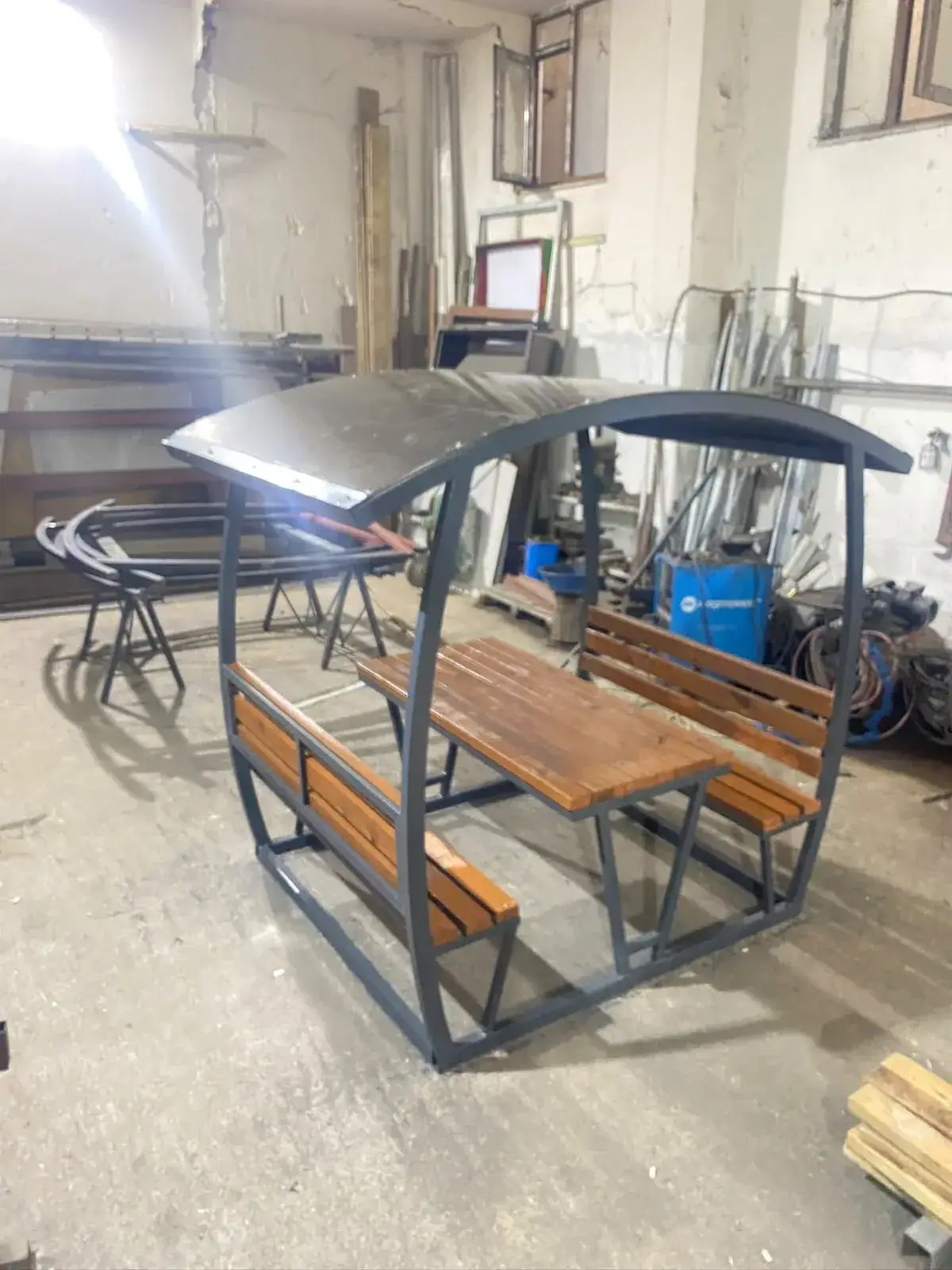
Welding Works and On-Site Welding
Welding joins two metal parts into a single piece by melting them. The visible part is over quickly; what determines the quality of the work is the preparation beforehand and the surface treatment afterward.
01Definition
Welding works: what they are and when you need them
Welding melts the two metals being joined, together with the filler wire between them, to form a single continuous body. Unlike bolts or rivets, the joint cannot be taken apart and, when done correctly, it is as strong as the base material. That strength comes not from how the weld looks but from its penetration: even if the seam looks good on the surface, if it hasn’t fused at the root, the joint will open up under load. That is why welding is not something you can judge just by looking at it.
There are two distinct ways of working. Workshop welding is done in a controlled environment: the piece is clamped, the welding position is chosen, there is no wind or moisture, and preheating is applied if necessary. On-site (field) welding is done where the piece cannot be moved or the installation can only be completed in place — adding to an existing structure, repairing a broken joint, installing railings and stairs, repairing a machine chassis and the like. Because wind, moisture, position constraints and difficult access come into play on site, the same job is always harder to do on site.
The jobs we are called for most often are repairing broken or cracked joints, reinforcing and extending existing steel structures, installing railings, stairs and platforms, repairing machinery and chassis, joining stainless steel and aluminum parts, and repairing doors and frames. Some of these are planned work and some are breakdowns; in both cases we first try to understand the cause, because re-welding a cracked weld in the same place often produces the same result.
The most often neglected part of welding is what comes after. If the seam is left as it is, it protrudes from the surface, the paint ends up thin there and corrosion starts there first. Done properly, the seam is ground flush with the surface, then cleaned and sealed with primer. With stainless steel, the discoloration in the weld zone (heat tint) must also be removed; a stainless weld seam that is not cleaned will rust from that zone, even though the material is stainless.
02Types
Welding methods and job types
The choice of method depends on the material, the thickness and whether the work will be done on site or in the workshop.
MIG/MAG (gas-shielded) welding
The most common method for carbon steel; fast, clean and continuous. Most steel construction, custom ironwork and general fabrication is done with it. Because it uses a shielding gas, a windscreen is needed on a windy site; otherwise the gas disperses and porosity forms in the seam.
Coated electrode (stick) welding
Because the electrode’s own coating provides the shielding, it is less affected by wind; it is preferred on site, in open areas and on thick sections. It requires slag removal and the seam does not come out as clean as with MIG, but it is reliable in difficult conditions.
TIG welding
Used on thin sections, stainless steel and aluminum. It produces the most controlled and cleanest seam; it is preferred for joints that will remain visible and in food and chemical environments. It is a slow method, so the labor involved is higher.
On-site repair and reinforcement
Repairing a broken joint, a cracked seam or a fatigued connection on site. The real work here is not the welding but the diagnosis: a joint that breaks in the same place a second time points not to a welding fault but to a design or load problem, and the reinforcement is planned accordingly.
Stainless steel and aluminum work
A different material calls for a different method and separate equipment. With stainless steel, removing the heat tint is decisive; with aluminum, it is removing the oxide layer and controlling the heat. A stainless surface worked with carbon steel tools will rust because of iron contamination.
03Technical
Application and technical considerations
These are the points decided on every job; the values are determined according to the material and the section.
| Method | MIG/MAG, coated electrode or TIG; according to the material and environment |
|---|---|
| Material | Carbon steel, stainless steel, aluminum; each requires separate equipment |
| Preparation | Weld edge preparation, cleaning, removal of rust and paint |
| Fit-up | Tack welding and squareness check; welding sequence planned to prevent heat distortion |
| Environment | Windscreen on site; no work in wet or freezing conditions |
| Post-weld | Grinding + cleaning + primer; heat tint removal on stainless steel |
| Inspection | Visual inspection; non-destructive testing can be requested for critical joints |
| Safety | Hot work permit, fire watch and extinguisher in flammable environments |
04Measurements
Site survey and planning
In welding work, the site survey is less about taking measurements and more about understanding the situation. In repair work, the first question is: why did this joint fail? Overload, fatigue, corrosion or a seam that was inadequate from the start? A repair made without understanding the cause comes back in the same place before long. That is why we examine the location and direction of the crack and the deformation around it, and recommend reinforcement where needed.
The second issue is environment and safety. On-site welding produces sparks and hot metal; if there are flammable materials, paint, insulation or a gas line underneath or nearby, the work plan is set up accordingly. In facilities, a hot work permit, a fire watch and an extinguisher are standard practice. The power supply, access (scaffolding, platform, bucket truck) and whether the working hours will interrupt production are also discussed from the start.
Diagnosing the cause
For repairs, we first establish why the joint failed; a weld made without eliminating the cause comes back in the same place.
Identifying the material
Carbon steel, stainless steel or aluminum — the method and filler material are chosen accordingly.
Environment and safety
Flammable materials, gas lines, insulation; the need for a hot work permit and a fire watch is determined.
Access and duration
The need for scaffolding, a platform or a bucket truck; whether production will stop, and the working hours.
05Process
From site survey to handover
Every job goes through the same seven steps. When one of them is skipped, the problem usually shows up not during installation but at the end of the first year.
- 01
Site survey
Measurements are taken on site; we see the opening, level differences, ground conditions and any existing structure. The dimensions on paper almost never match those on site exactly.
- 02
Design and drawings
A technical drawing is prepared from the measurements. Infill divisions, profile sections and any automation layout are finalized at this stage.
- 03
Approval
The drawing and the color and material choices are approved in writing. Because a change after approval means reversing fabrication, this step is not rushed.
- 04
Fabrication
Cutting, bending and welding are done in our workshop in Arnavutköy. Weld seams are ground flush with the surface.
- 05
Surface treatment
The surface is prepared by sandblasting and primed, then electrostatic powder coating is applied. For parts that will stay outdoors, galvanizing comes into play.
- 06
Installation
On site, the work is anchored, aligned and, if needed, welded in place. If there is automation, the electrical connection and photocell adjustment are completed the same day.
- 07
Handover
Operation is checked, and use and maintenance are explained. Remote controls are programmed, locks are handed over and any phone app is set up at this stage.
06Price
What determines the price?
In welding work, the price is driven by time, not by length; the seam itself is often the shortest part of the job.
Preparation time
Cleaning, removing rust and paint, edge preparation and fit-up; this can take longer than the seam itself.
Material and method
Stainless steel and aluminum require slower and more expensive methods than carbon steel.
Position and access
Overhead and vertical positions, height, and the need for scaffolding or a bucket truck directly increase the time.
Site conditions
Wind, temperature and working-hour constraints (at night, on weekends, without stopping production) change the plan.
Post-weld treatment
Grinding, cleaning, primer and, on stainless steel, heat tint removal are separate labor items.
Safety requirements
Hot work permits, a fire watch and additional precautions are reflected in the site plan.
07Maintenance
After welding and service life
A properly made weld does not fail before the base material does. Deterioration almost always comes not from the seam itself but from the area around it and from a lack of surface protection. That is why post-weld grinding, cleaning and primer are an integral part of the job for us — we don’t walk away from a joint that will stand outdoors saying “the weld’s done.”
For joints standing outdoors or in humid environments, we recommend a visual inspection once a year. What you are looking for is not rust but cracks: a fine line along the edge of the seam, blistering of the paint along the same line or deformation around it shows that the joint is under strain. Caught early, it can be fixed with reinforcement; neglected, the piece breaks and has to be replaced. On stainless steel parts, if discoloration or pinpoint rust appears in the weld zone, it means the heat tint was not fully removed.
08FAQ
Frequently asked questions about Welding Works
Do you come to the site to weld?
We do. For jobs where the piece cannot be moved or the installation can only be completed in place, field welding is the only option anyway. But we say this up front: because wind, moisture, position and access constraints come into play on site, the same job takes longer than in the workshop and requires more careful planning. If the environment is flammable, a hot work permit and fire precautions also become part of the plan.
If a part breaks, is it enough to just weld it back?
Often not. A joint that breaks in the same place a second time points not to a welding fault but to a load or design problem; repeating the same seam gives the same result. That is why we first look at why it failed and recommend reinforcement where needed. We do not take on a repair that leaves the cause unaddressed.
Do you weld stainless steel?
We do; we use separate equipment and separate methods for stainless steel and aluminum. Two things are critical with stainless steel: removing the heat tint in the weld zone and keeping it out of contact with carbon steel tools. If even one of these is skipped, the material can rust from that zone even though it is stainless.
How can I tell whether a weld is sound?
You can’t tell by eye; even if the seam looks neat on the surface, it may not have fused at the root. Visual inspection reveals surface defects (porosity, undercut, overlap) but not penetration. For structural and critical joints, non-destructive testing (dye penetrant, ultrasonic) can be requested; we also recommend it on jobs that call for it.
Can you weld onto a painted part?
Paint and rust are always stripped from the weld zone. A seam laid on a surface with paint left on it develops porosity and its penetration drops; burning paint also gives off toxic fumes. This cleaning is the unseen but unskippable part of the job, and it is included in the time.
Can zinc-coated (galvanized) parts be welded?
They can, but on two conditions: the zinc must be removed from the weld zone and the area must be well ventilated — burning zinc gives off fumes that are harmful to health. Since that zone loses its zinc protection after welding, it has to be sealed again with cold galvanizing or a suitable coating; if this step is skipped, corrosion starts at exactly that spot.
How long does it take?
The seam itself is usually the shortest part of the job; the time is determined by preparation, access and post-weld work. A small repair may take half a day, while a job of the same size can stretch to several days if it is at height and needs scaffolding. Send us photos and the location, and we will give you an approximate time.
Do you employ certified welders?
Some jobs require welder certification and a welding procedure — particularly pressure vessels, structural steel and certain industrial work. If there is such a requirement, tell us at the start of the project; we will tell you clearly which certification is needed and whether we can work within that scope. We do not take on a scope we cannot deliver as though we could.
09Related services
Work often done alongside this
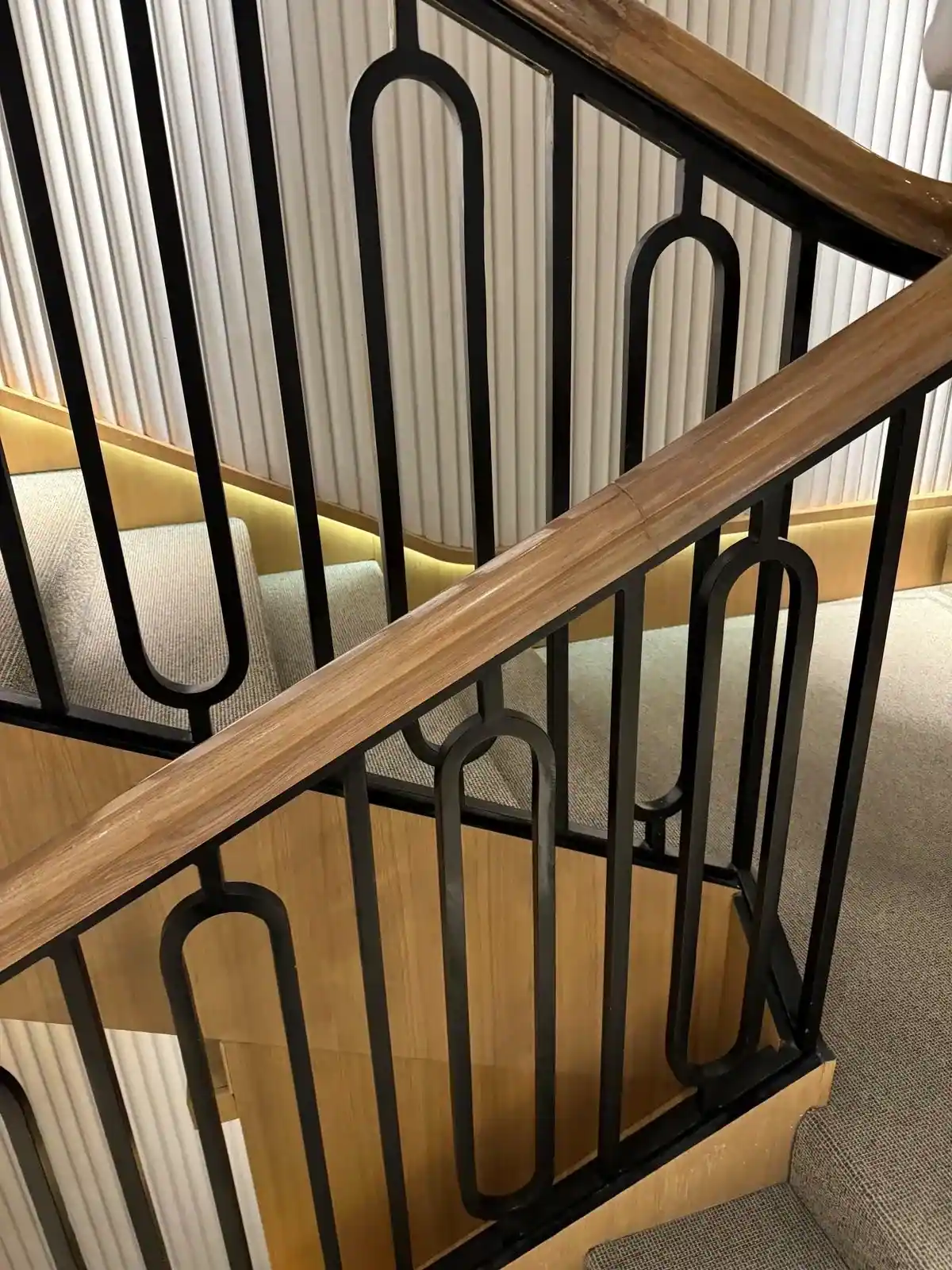
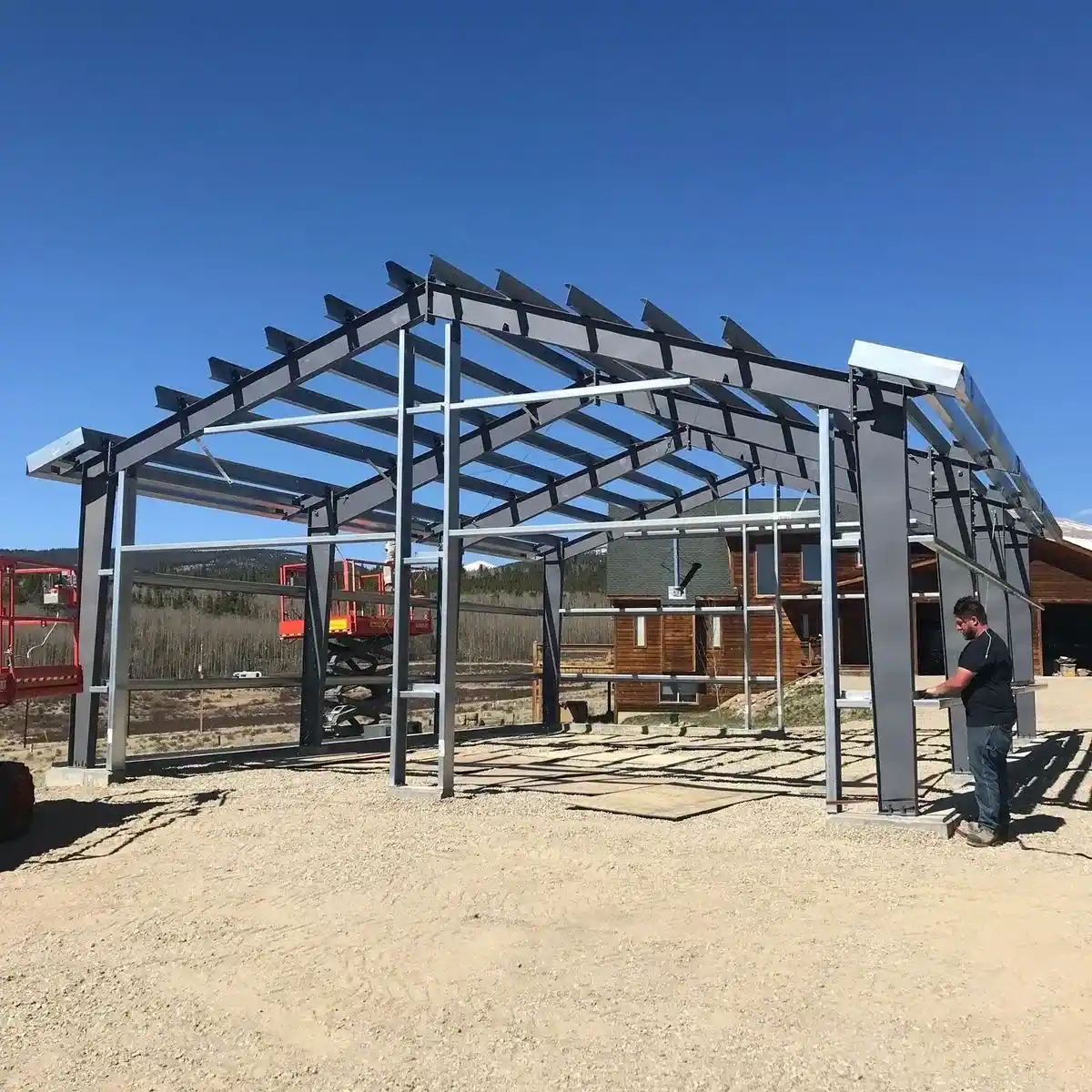
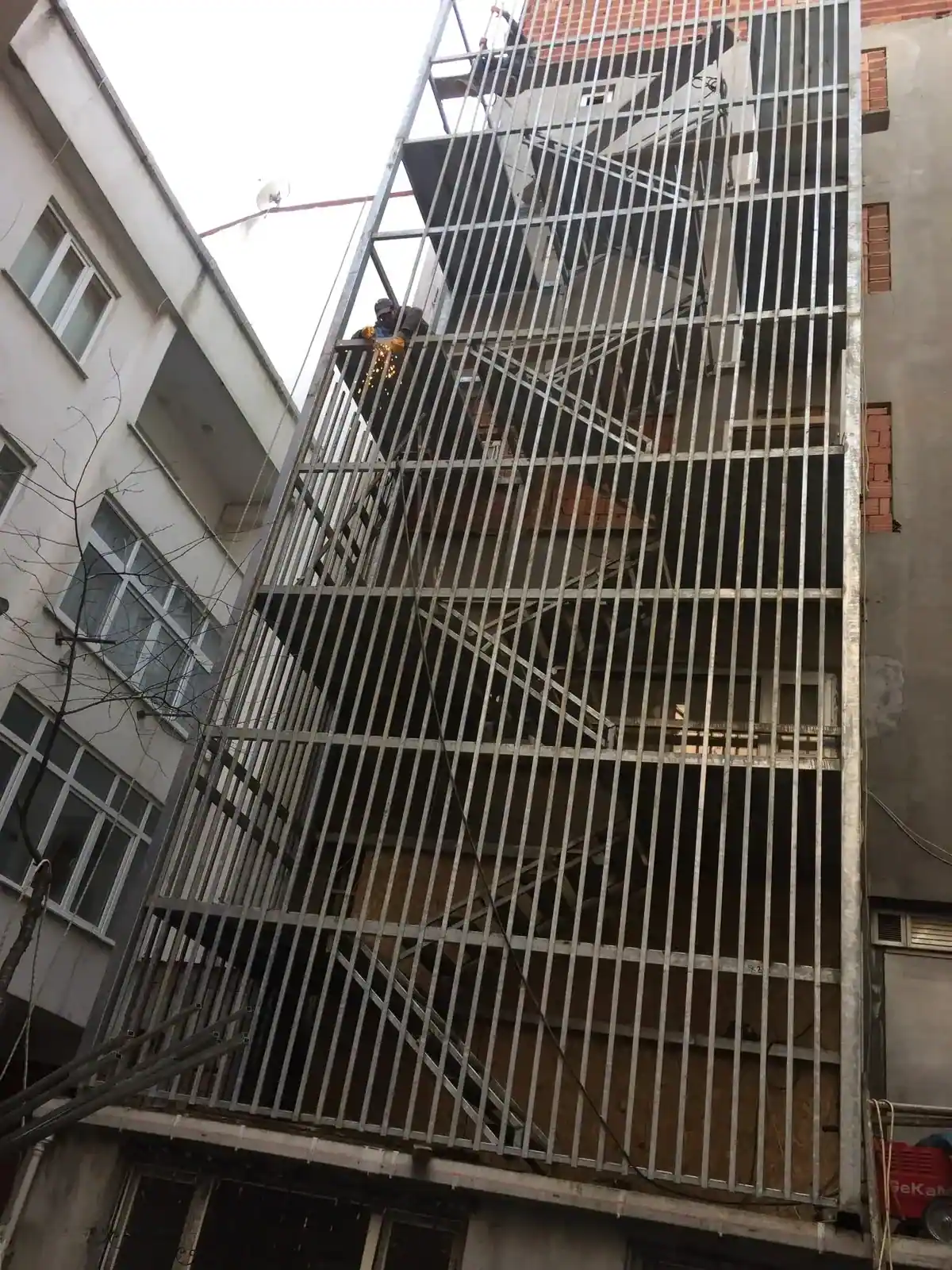
14 / Contact
Send us your measurements for Welding Works
Approximate measurements and your district are enough for us to outline the quote. Let’s set the best day for the site survey in the same conversation.