
Türkiye · Province
Metal fabrication and installation in Antalya
Long, harsh summers; shading, pergolas and terrace solutions lead the way.
This page also covers the surrounding area: Konyaaltı · Lara · Kemer · Manavgat
01Area
What kind of work comes up in Antalya?
Shading is at the center of demand in Antalya. Long, harsh summers mean that terraces, gardens and parking areas become unusable without shade; that is why the most asked-about items are pergolas, canopies and terrace-top solutions. Villas and holiday homes dominate along Konyaaltı, Lara and Kemer, while around Manavgat demand comes mainly from tourism facilities.
The hot climate has two concrete consequences for metal. The first is expansion: a long pergola or canopy run measurably lengthens and shortens with the temperature swing over the day. If no expansion allowance is left on long spans, the connections are strained and play develops over time. The second is surface temperature: dark metal in direct sun gets too hot to touch; at contact points such as railing handrails and gate handles, the choice of color and section takes this into account.
The second issue for shade structures is wind. Because a pergola is a wide, horizontal surface, it is subject to uplift in the wind; on the coast this effect is noticeably stronger than inland. Here, the job of the posts and anchoring is less to support the structure than to keep it from lifting. What goes on top — fixed panels, adjustable slats or plants — is an input to the calculation; without this information, the section cannot be chosen correctly.
On the coast, the third issue is salty humidity. In areas near the sea such as Lara and Kemer, we recommend a galvanized body and stainless steel fasteners; all cutting and drilling is finished in the workshop, before painting. A hole drilled on site means an unprotected edge, and deterioration always starts there.
Demand profile
Shading is at the center of demand in Antalya: pergolas, canopies and terrace-top solutions. Villa and holiday-home demand is concentrated in the west; tourism facility work increases toward the east.
Next come villa entrance gates, railings and wrought iron. Work for tourism facilities has a schedule of its own: because it has to be done outside the season, it is squeezed into a specific window of the year, and planning starts months in advance.
02Services
Featured work in Antalya
This list is based on the requests we receive most often from this area. You can also write to us about work that isn’t on the list.
- Canopies and PergolasEntrance canopies, carports, pergolas and winter gardens.
- Villa Driveway GatesSliding, double-leaf swing and cantilever sliding garden gates, made to measure.
- Wall-Top RailingsWrought iron and modern railing designs that complete the garden wall.
- Wrought IronGates, railings, canopies and window grilles with hand-forged details.
- Steel ConstructionStructural steel systems for warehouses, workshops and commercial buildings.
03Local conditions
What drives our decisions in Antalya?
Climate, ground, wind and access conditions directly change our decisions on sections, surface treatment and installation. This section explains what we do differently in this area, and why.
01
Expansion and long spans
A long pergola or canopy run measurably lengthens and shortens with the temperature swing over the day. When no allowance is left, the connections are the only place that absorbs this movement, and over time they loosen. It is a problem we often see in Antalya, and if it is not solved at the outset, it surfaces a few years later; leaving the allowance at the fabrication stage costs almost nothing, while correcting it later means taking the run apart.
02
Surface temperature and contact points
A dark metal surface in direct sun gets too hot to touch. This directly affects the choice of color and section at contact points such as railing handrails and gate handles. Where needed, we fit timber or composite handrails. Which way the terrace faces is also an input: a surface in sun all day and one that is shaded in the afternoon call for different solutions.
03
Wind load on shade structures
Because a pergola is a wide, horizontal surface, it is subject to uplift in the wind; on the coast this effect is noticeably stronger than inland. The job of the posts and anchoring is less to support the structure than to keep it from lifting. What goes on top — fixed panels, adjustable slats, plants — is an input to the calculation, and without this information the section cannot be chosen correctly.
04From the field
Situations we often encounter in this area
We don’t give client names, project names or dates; what we describe is the situation itself and how it was solved.
Heat builds up under fixed panels
Feedback we get after shading is installed: there is shade, but it isn’t cool underneath. The cause is a fully closed top surface trapping hot air below. Adjustable slats or a ventilation gap left in the panels make a clear difference. That is why, at the decision stage, we discuss not only how much shade there will be but also how the air beneath it will move.
Facility work doesn’t fit the off-season window
The most common planning problem at tourism facilities. Because all fabrication is completed in the workshop, time on site is limited to installation, which makes it possible to fit the work into an off-season window. But since the window is narrow, fabrication has to be finished before that date. When the target date is given early, the schedule is built backward and the work fits comfortably into the window.
05Models
The models we’re asked about most in this area
All are made to measure; the model is a starting point. Changes can be made to suit the dimensions and the opening.
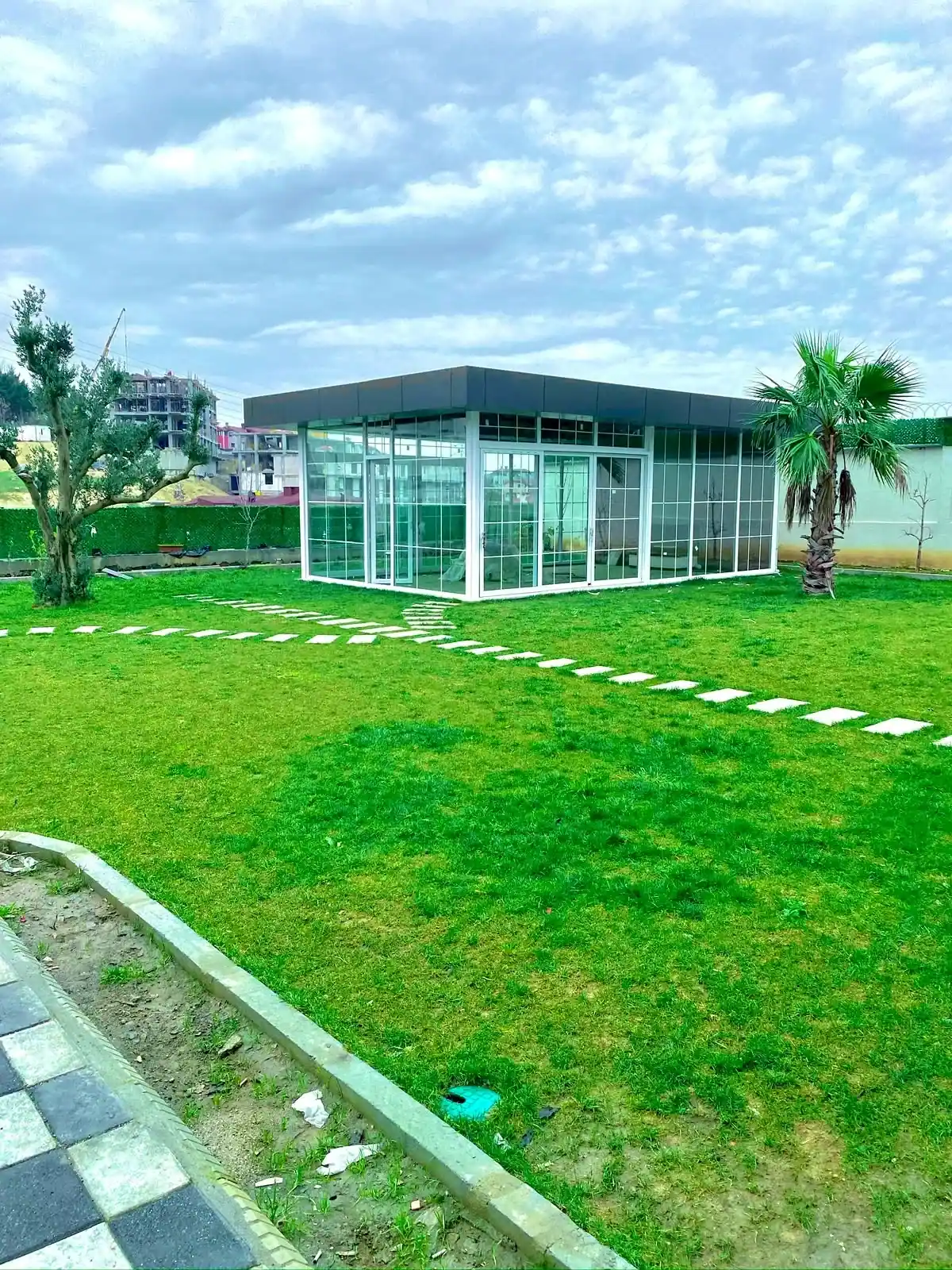
Glass Canopy and Winter Garden
Canopies and Pergolas · Anthracite, black or white profiles
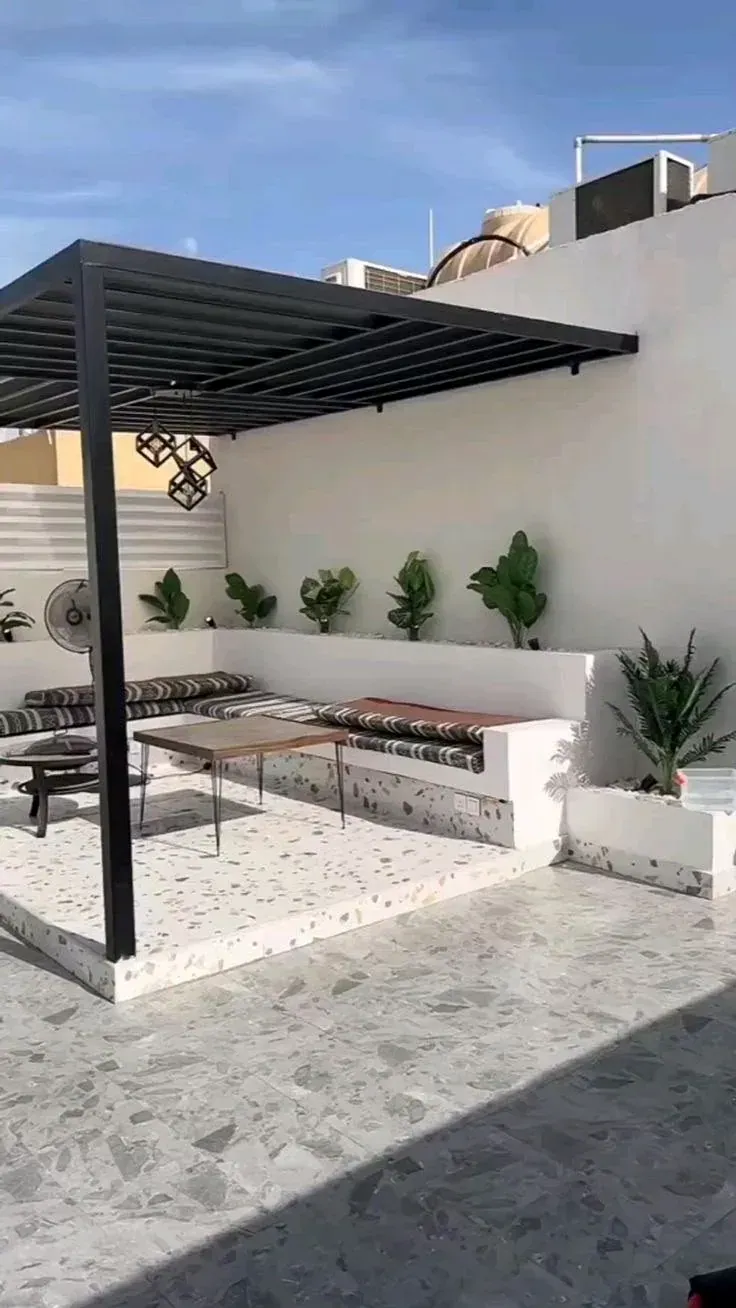
Carport and Entrance Canopy
Canopies and Pergolas · Anthracite, black or RAL of your choice
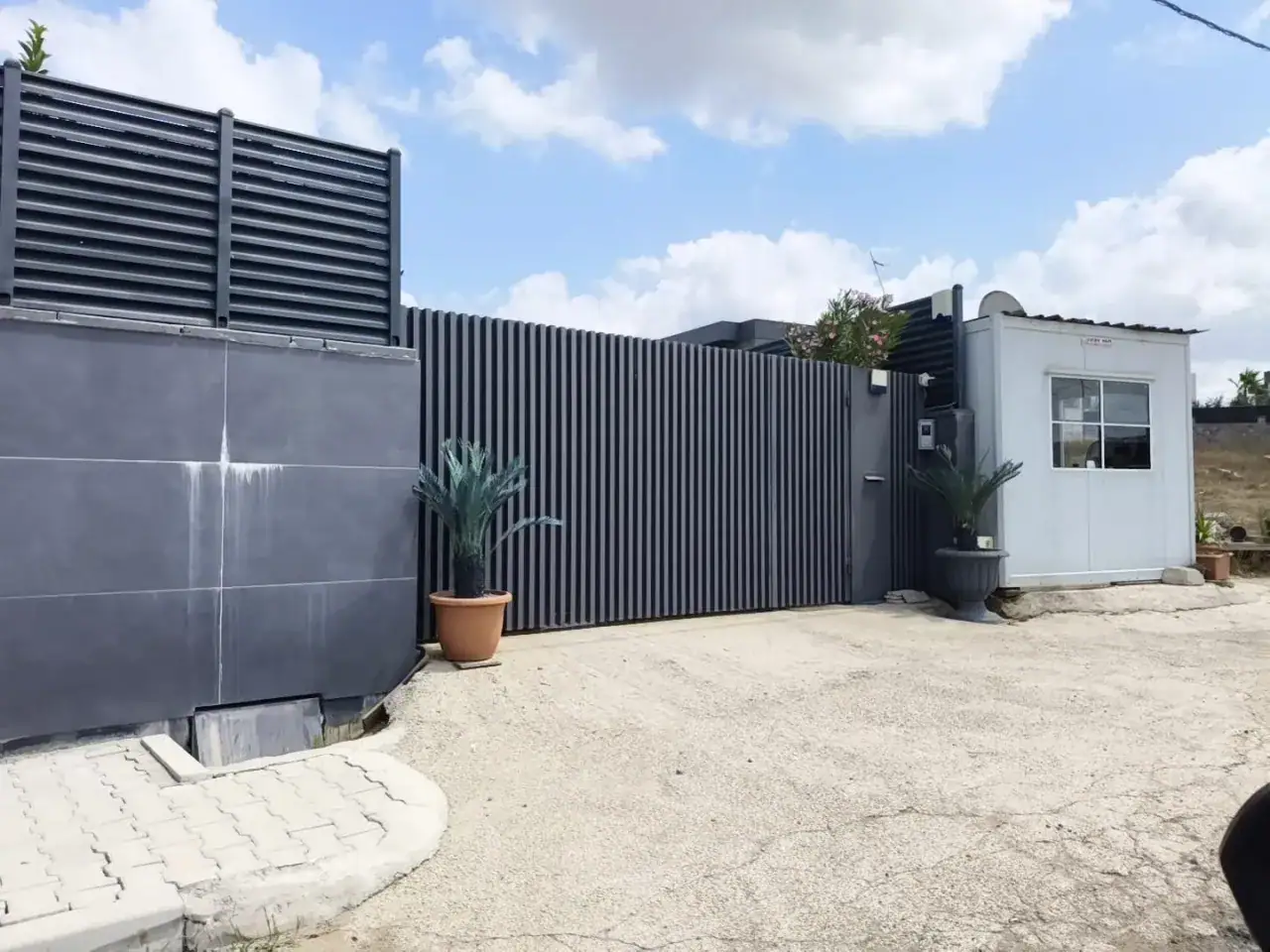
Anthracite Horizontal-Slat Sliding Villa Gate
Villa Driveway Gates · Anthracite gray (RAL 7016)
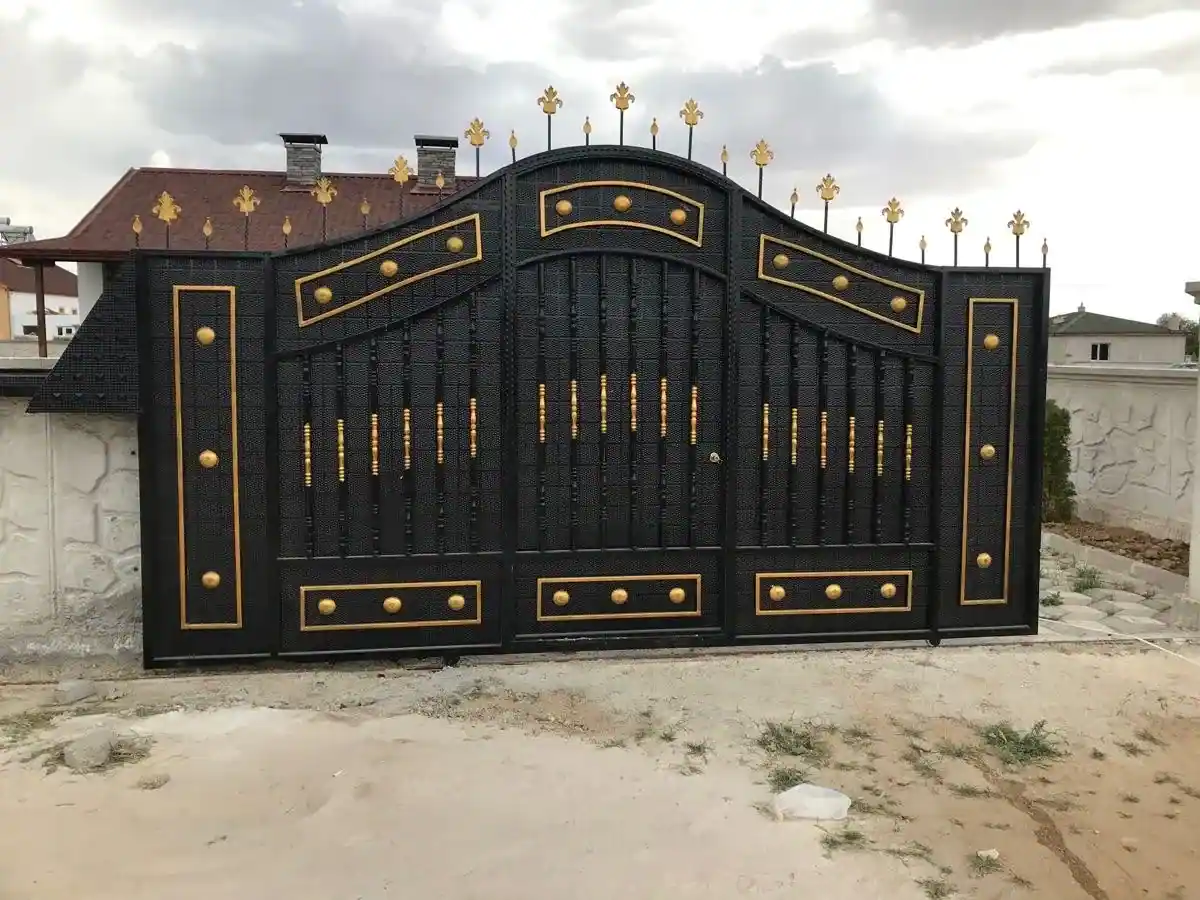
Double-Leaf Wrought Iron Villa Gate
Villa Driveway Gates · Matte black with antique gold patina
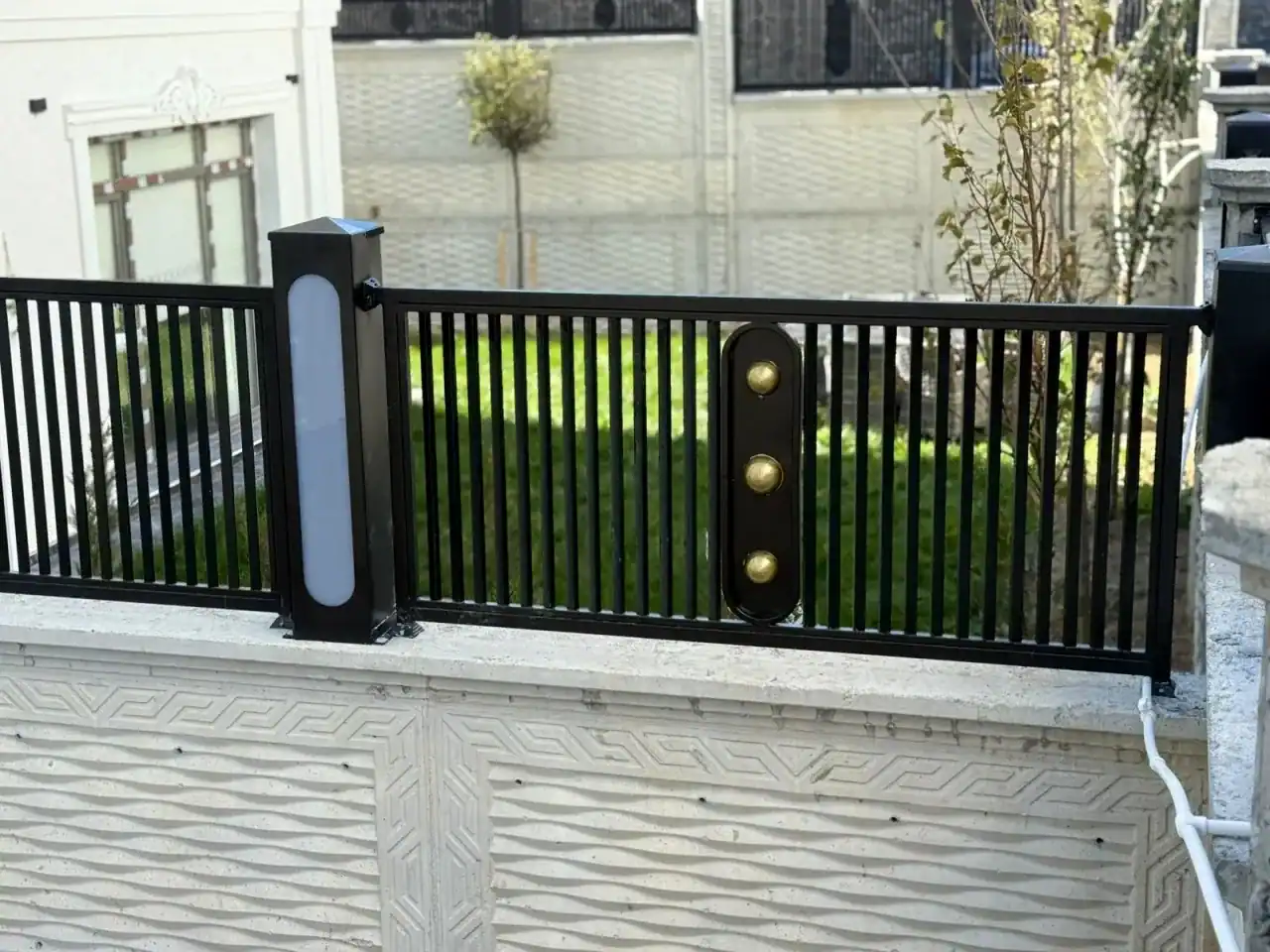
Vertical-Bar Wall-Top Railing
Wall-Top Railings · Anthracite or matte black
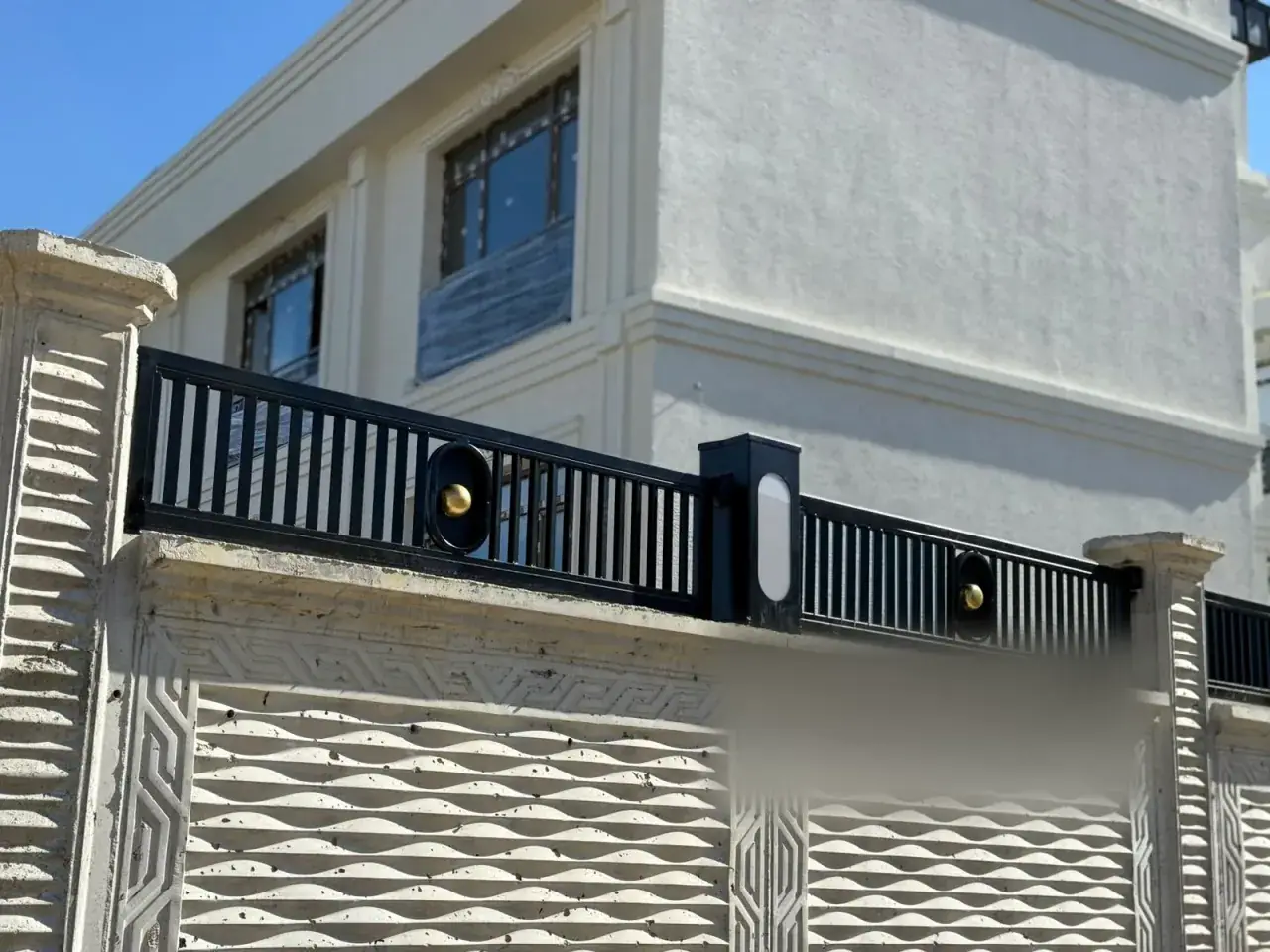
Horizontal-Slat Wall-Top Railing
Wall-Top Railings · Anthracite gray (RAL 7016)
06Delivery and installation
How do we get from Arnavutköy to Antalya?
Shipments from Arnavutköy to Antalya are planned; parts are prepared in sizes suited to transport and joined on site. At tourism facilities, off-season installation is preferred, and the schedule is built accordingly.
Measuring is done in a single visit; the terrace’s orientation, surfaces that get sun all day and wind exposure are noted on the same visit. Parts are sized to what the route allows, and the remaining joints are made on site. At tourism facilities, installation is planned for the off-season window; we state the exact number of days in the quote.
We have no branches or dealers; all fabrication is done in our own workshop in Arnavutköy. Price and lead time depend on the size of the job, the opening and the installation conditions — so we don’t quote a figure or a number of days up front here. Send your measurements and location, and we’ll work it out for your project.
07FAQ
Frequently asked questions for Antalya
Does a pergola really provide shade in summer?
It depends on what is on top. Fixed panels give full shade, but hot air can build up underneath; adjustable slats let you control the shade by angle; plants create shade over time and add extra load to the frame. Tell us when you use the space and which way the terrace faces, and we will decide together which is right for you.
Will a railing get hot enough to burn in the heat?
A dark metal surface in direct sun heats up considerably. At contact points — handrails, gate handles — the choice of color and section and, where needed, a timber or composite handrail solve the problem. If you tell us which way the terrace faces, we will also take into account which surfaces get sun all day.
Do you work off-season on hotel and facility projects?
That is the preferred approach. Because all fabrication is completed in the workshop, time on site is limited to installation and can be planned within an off-season window. If you give us your target date early, we can build the schedule around it; we state the exact duration in the quote based on the size of the job.
Why isn’t it cool under my pergola?
A fully closed top surface gives shade but traps hot air underneath. Slats that can open, or an air gap left in the panels, change the picture considerably. When deciding, you need to look not only at how much shade you get but also at how the air beneath will move.
What should I watch out for on a long canopy run?
The expansion allowance. A long run measurably lengthens and shortens with the temperature swing over the day; without an allowance, the connections are strained and play develops after a few years. Leaving the allowance during fabrication costs almost nothing; correcting it later means taking the run apart.
If I choose a light-colored railing, won’t it stay cool?
A light color lowers the surface temperature but may not be enough on its own; a metal handrail in direct sun still heats up. At contact points, a timber or composite handrail is the clearest solution. Tell us which way the terrace faces — a surface in sun all day and one that is shaded in the afternoon call for different solutions.